The Complete Guide to Tube Laser Cutting Machines in 2026
Introduction
In the dynamic world of metal fabrication, precision, efficiency, and versatility are paramount. As we look towards 2026,
tube laser cutting technology stands at the forefront of innovation, revolutionizing how industries process metal tubes and pipes. This guide delves into everything you need to know about
tube laser cutting machines, from their fundamental operation to the diverse applications that make them indispensable in modern manufacturing. Whether you’re a plant owner, a procurement manager, or an industry enthusiast, understanding these advanced systems is key to optimizing production and staying competitive. We’ll explore the various types, advantages over traditional methods, and crucial factors to consider when choosing the
best tube laser cutting machine for your specific requirements.
What Is a Tube Laser Cutting Machine and How Does It Work
A
tube laser cutting machine is a highly advanced piece of equipment designed to cut various types of metal tubes and pipes with exceptional precision and speed. It utilizes a focused laser beam to melt, vaporize, or burn through the material, creating intricate shapes, holes, and precise cuts according to a pre-programmed design.
Definition and Core Components
At its core, a
tube laser cutting machine integrates laser technology with sophisticated motion control systems. The main components include:
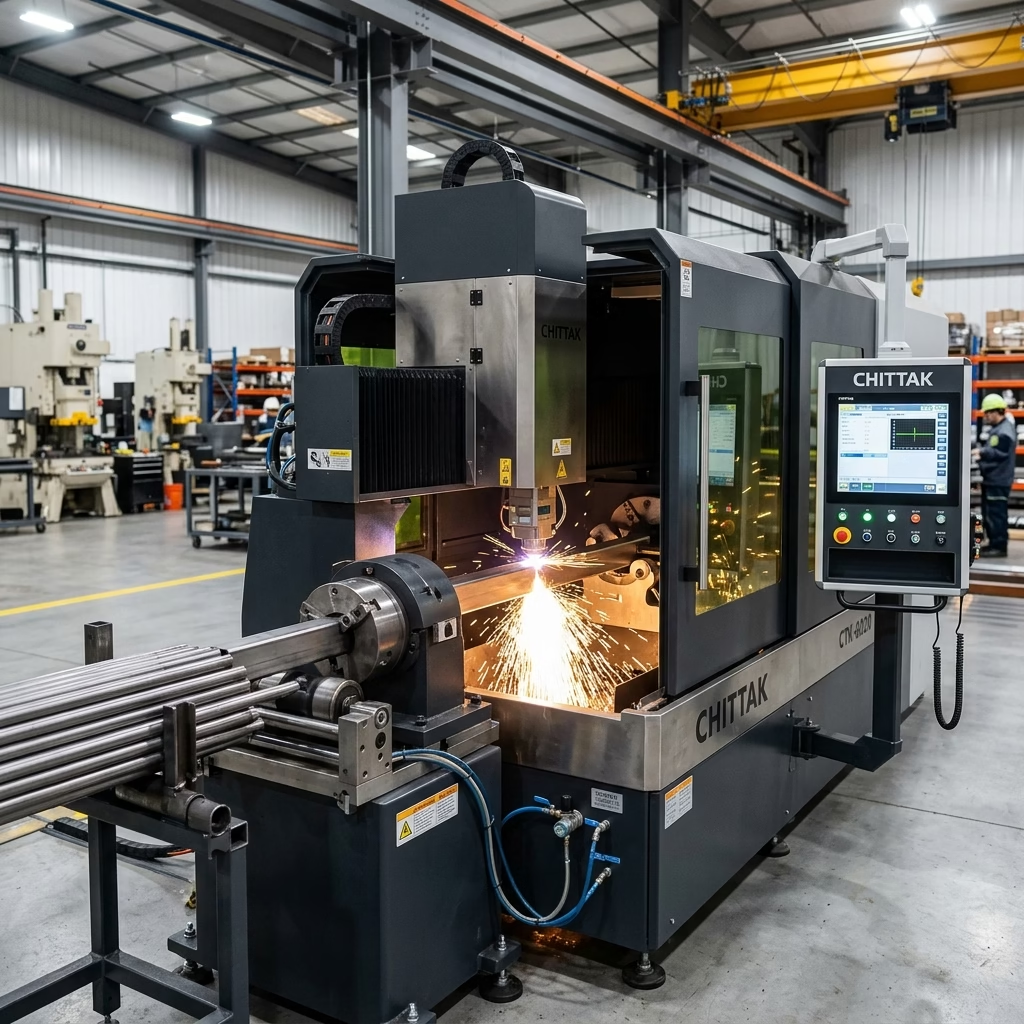
- Laser Resonator/Source: Generates the high-intensity laser beam (e.g., fiber laser, CO₂ laser).
- Beam Delivery System: Mirrors, lenses, and fiber optic cables guide the laser beam from the source to the cutting head.
- Cutting Head: Contains focusing optics and a nozzle that directs the laser beam and assist gas onto the workpiece.
- Chucking System: Securely holds and rotates the tube or pipe during the cutting process. This can range from single-chuck to multi-chuck configurations.
- Machine Frame: Provides a stable platform for all components.
- CNC Control System: The “brain” of the machine, interpreting CAD/CAM designs and controlling all movements and laser parameters.
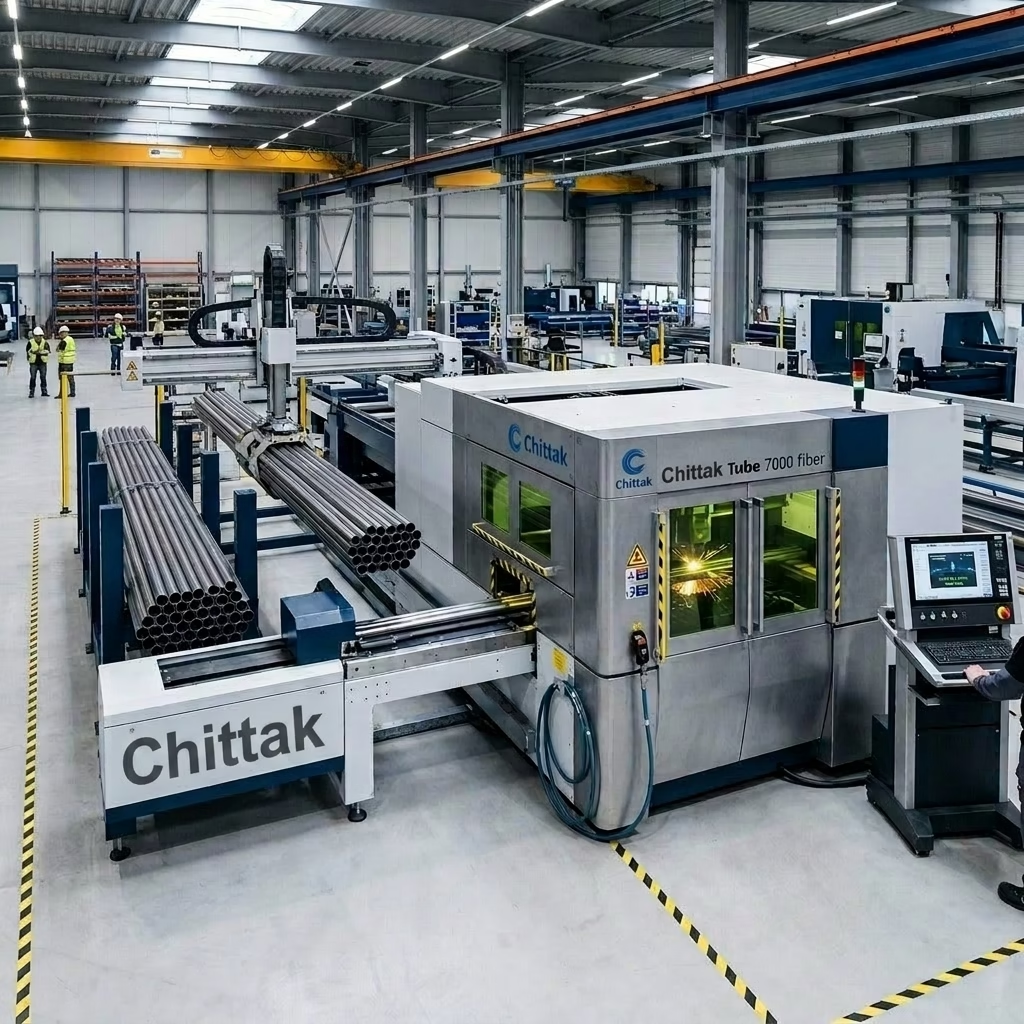
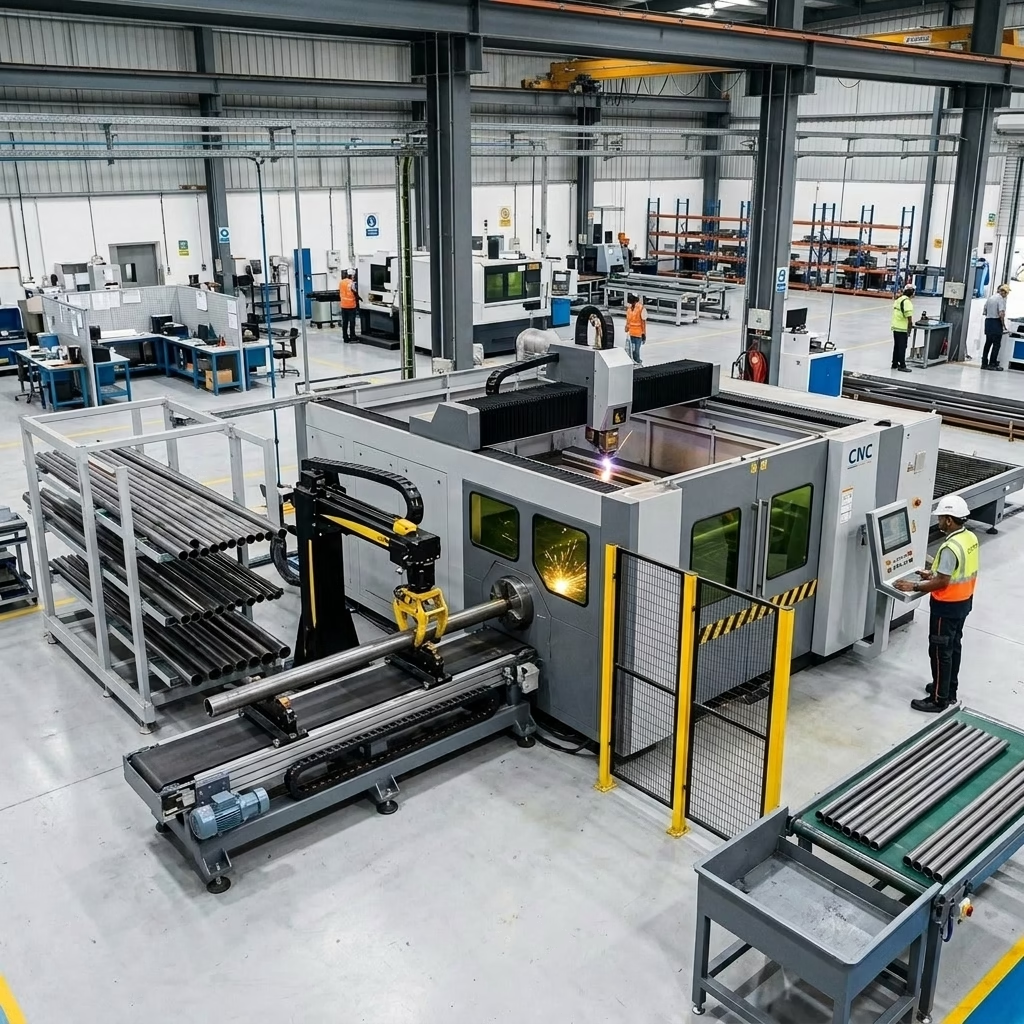
- Automatic Loading/Unloading System: Often integrated for enhanced automation, handling raw material and finished parts.
The Cutting Process Step by Step
The operation of a
cnc tube laser cutting machine is a finely orchestrated sequence:
- Design Input: A 2D or 3D CAD model of the desired cut part is created and then imported into the machine’s CAM software.
- Programming: The CAM software generates the cutting path, optimizes material usage (nesting), and sets laser parameters (power, speed, assist gas).
- Material Loading: The raw metal tube is loaded into the machine, either manually or via an automatic loading system, and securely clamped by the chucks.
- Laser Ignition: The laser resonator generates a powerful beam.
- Beam Delivery: The laser beam is directed through the beam delivery system to the cutting head.
- Focusing and Cutting: The cutting head focuses the beam onto the tube’s surface. Simultaneously, an assist gas (like oxygen, nitrogen, or compressed air) is blown through the nozzle to clear molten material and cool the cut zone, resulting in a clean edge.
- Motion Control: The CNC system precisely controls the movement of the cutting head along the tube’s surface and the rotation/translation of the tube itself, executing the programmed cut path.
- Part Unloading: Once cutting is complete, the finished parts and any scrap are unloaded, often automatically.
CNC Control and Automation Features
Modern
tube laser cutting machines are driven by advanced CNC (Computer Numerical Control) systems. These systems allow for:
- Precision and Repeatability: Ensuring identical parts are produced consistently.
- Complex Geometries: Ability to cut intricate shapes, holes, slots, and bevels that would be challenging or impossible with traditional methods.
- Nesting Optimization: Software that intelligently arranges multiple part designs on a single tube to minimize material waste.
- Real-time Monitoring: Operators can monitor the cutting process, adjust parameters, and diagnose issues.
- Integration with CAD/CAM: Seamless workflow from design to production.
- Automation: Features like automatic bundle loaders, unloaders, and sorting systems reduce manual labor and increase throughput, contributing to a lower tube laser cutting machine price per part.
Types of Tube Laser Cutting Machines
The market offers a variety of
tube laser cutting machine types, each with specific strengths suited for different applications and materials.
Fiber Laser Tube Cutters
Fiber lasers use optical fibers doped with rare earth elements to generate the laser beam.
- Advantages: High cutting speed, excellent beam quality for fine details, high energy efficiency, low maintenance due to no mirrors to align, and superior ability to cut highly reflective materials like copper and brass.
- Best for: A wide range of metals, including stainless steel, carbon steel, aluminum, brass, and copper, often favored for high-volume production.
- Chittak’s Offerings: Chittak specializes in advanced fiber laser tube cutting solutions, known for their precision and reliability.
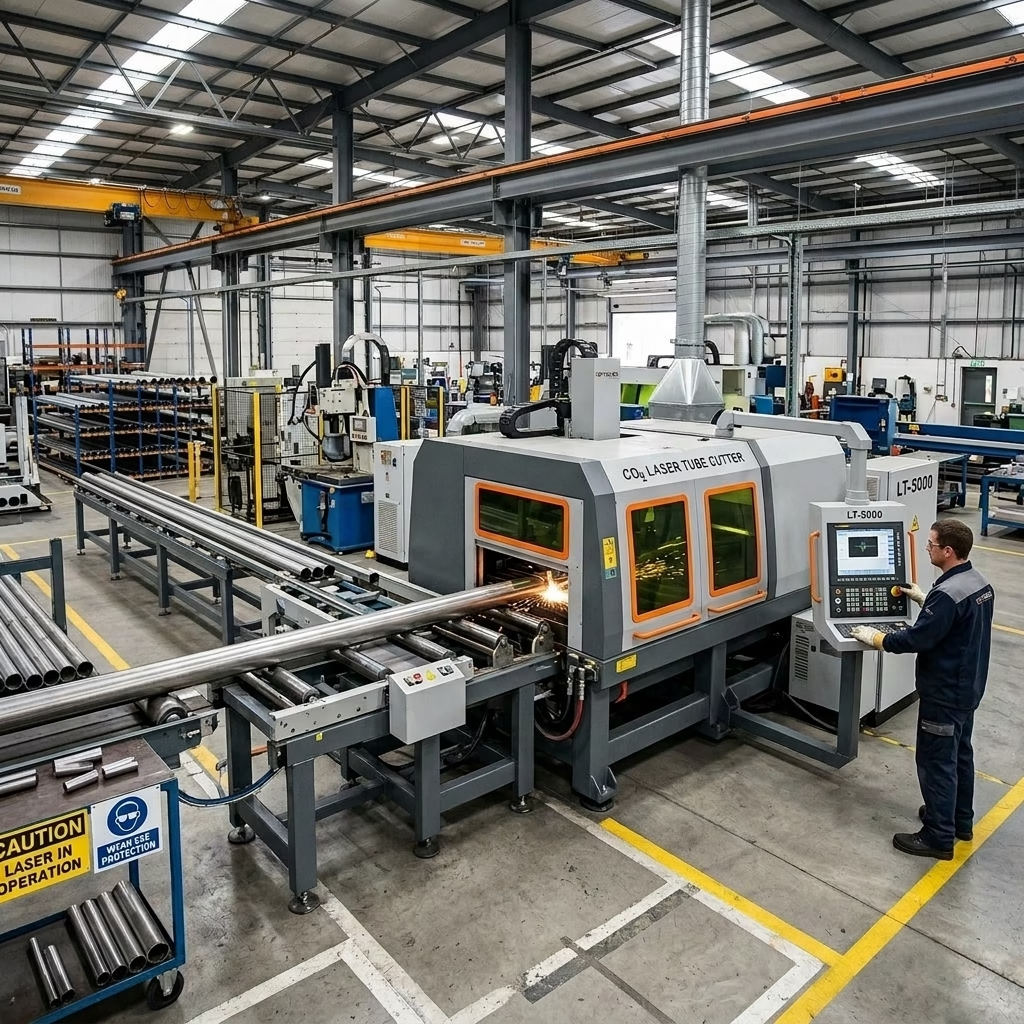
CO₂ Laser Tube Cutters
CO₂ lasers generate a laser beam by exciting a mixture of gases, primarily carbon dioxide.
- Advantages: Excellent cut quality on thicker materials, particularly mild steel, and good for non-metals. Historically, they were the standard for industrial laser cutting.
- Best for: Thicker carbon steel and some non-metallic applications, though increasingly being replaced by fiber lasers for metal processing.
3-Axis vs 5-Axis Systems
- 3-Axis Systems: These machines typically move the cutting head along X, Y, and Z axes while the tube rotates. They are excellent for cutting perpendicular to the tube surface and for creating various holes, slots, and profiles.
- 5-Axis Systems: In addition to X, Y, Z movements, 5-axis machines add two rotational axes (A and B or C). This allows the cutting head to tilt and rotate, enabling bevel cuts, chamfers, and complex 3D contours that are not perpendicular to the tube surface.
- Best for: Automotive exhaust systems, structural components requiring weld-prep bevels, and parts with complex angular cuts. Some trumpf tube laser cutting machines feature advanced 5-axis capabilities.
Single-Chuck vs Multi-Chuck Configurations
- Single-Chuck: The tube is held by one chuck, often at one end, and supported by rollers. This limits the length of the tube that can be processed without repositioning or can lead to vibration with longer tubes.
- Multi-Chuck: Typically features two or more chucks that hold the tube, providing greater stability, allowing for longer tubes to be processed accurately, and enabling “zero-tail” cutting by allowing the chucks to transfer the workpiece. This configuration significantly reduces material waste and is a hallmark of the best tube laser cutting machine designs.
Key Advantages Over Traditional Tube Processing Methods
Tube laser cutting offers a transformative leap over conventional methods like sawing, drilling, punching, and milling, providing substantial benefits across the manufacturing spectrum.
Precision and Cut Quality
Laser cutting delivers unparalleled accuracy with tolerances often in the micron range. The narrow kerf (cut width) and minimal heat-affected zone (HAZ) result in clean, burr-free edges that often require no secondary finishing, drastically improving the overall quality of the final product.
All-in-One Processing Capabilities
A single
cnc tube laser cutting machine can perform tasks that traditionally required multiple machines. It can cut, drill, punch, notch, and bevel in one continuous operation, eliminating the need for transferring workpieces between different stations and reducing setup times.
Material Savings with Zero-Tail Cutting
Advanced multi-chuck systems enable “zero-tail” or “remnant-free” cutting, where the machine can utilize almost the entire length of the raw tube, significantly reducing scrap material. Optimized nesting software further maximizes material utilization, leading to considerable cost savings, which impacts the overall
tube laser cutting machine price investment positively in the long run.
Labor Cost Reduction Through Automation
With automatic loading, cutting, and unloading features,
tube laser cutting machines require minimal operator intervention. This high level of automation drastically reduces labor costs, frees up skilled workers for other tasks, and allows for continuous operation, even lights-out production, thereby lowering the
tube laser cutting machine price per produced part.
Complex 3D Cutting and Bevel Capabilities
Unlike traditional methods limited to straight or simple cuts, 5-axis tube laser cutters can create intricate 3D geometries, complex joint designs, and precise bevels for weld preparation. This capability opens up new design possibilities and simplifies subsequent assembly processes.
Speed and Production Efficiency
The speed of laser cutting, combined with integrated automation and the ability to perform multiple operations, translates to significantly higher throughput and production efficiency. This rapid processing is vital for meeting tight deadlines and large production volumes.
Industries and Applications Using Tube Laser Cutting
The versatility and efficiency of
tube laser cutting make it indispensable across a multitude of industries.
Fitness Equipment Manufacturing
From elliptical trainers to weight racks and bicycle frames, fitness equipment often relies on precisely cut and joined tubes.
Tube laser cutting machines enable the creation of lightweight, strong, and aesthetically pleasing designs with tight tolerances for easy assembly.
Automotive and Exhaust Systems
The automotive industry utilizes
tube laser cutting for roll cages, chassis components, and especially exhaust systems. The ability to create complex bends, precise mounting holes, and intricate cutouts for catalytic converters and mufflers with 5-axis capabilities is crucial.
Metal Furniture and Architectural Design
Contemporary metal furniture and architectural elements frequently feature intricate tubular designs. Laser cutting allows for the production of custom components, ornate patterns, and structural elements with high precision, contributing to both aesthetics and structural integrity.
Construction and Structural Steel
For structural applications, such as bridge components, building frames, and scaffolding, tube laser cutting provides accurate coping, hole drilling, and slotting, simplifying on-site assembly and reducing welding time.
Agricultural Machinery
Agricultural equipment, including tractors, harvesters, and implements, uses a vast array of tubular structures. **CNC tube laser cutting machines** help produce durable and precise components that can withstand demanding environments.
How to Choose the Best Tube Laser Cutting Machine for Your Needs
Selecting the
best tube laser cutting machine involves a thorough evaluation of your specific production requirements, budget, and long-term goals.
Tube Diameter and Length Capacity
Consider the maximum and minimum tube diameters and lengths you will process. Machines come with different chuck sizes and bed lengths. Ensure the machine’s capacity aligns with your current and future material dimensions. Chittak offers a range of machines with varying capacities.
Laser Power Requirements
The required laser power (e.g., 1kW to 30kW+) depends on the material type and thickness you intend to cut. Higher power generally means faster cutting and the ability to process thicker materials. Fiber lasers are particularly efficient for thinner to medium-thick metals. Consult with a specialist to determine the optimal power for your applications.
Automation Level and Loading Systems
Evaluate your desired level of automation.
A fully automated system with bundle loading, precise sorting, and unloading can drastically boost productivity and reduce labor, though it comes with a higher initial
tube laser cutting machine price. For smaller operations, a semi-automatic system might suffice.
Software and Control System Compatibility
The machine’s software and CNC control system should be intuitive, robust, and compatible with your existing CAD/CAM workflows. Look for features like nesting optimization, remote diagnostics, and user-friendly interfaces. Chittak’s machines feature advanced control systems designed for ease of use and maximum efficiency.
Top Brands: Trumpf, Chittak, and Other Leading Manufacturers
Research reputable brands known for quality, reliability, and excellent customer support.
- Trumpf: A global leader, known for high-end, precise trumpf tube laser cutting solutions.
- Chittak: An innovative manufacturer providing high-performance fiber tube laser cutting machines with a focus on automation and value.
- Other leading manufacturers: Bystronic, Mazak, BLM Group, and Golden Laser also offer a range of reliable machines. Consider after-sales service, spare parts availability, and technical support as these are crucial for long-term operational success. The tube laser cutting machine price can vary significantly between brands and configurations.
Conclusion
Tube laser cutting machines are no longer just an option but a necessity for modern metal fabrication, offering unparalleled precision, efficiency, and versatility. As we move into 2026, the advancements in fiber laser technology, automation, and intelligent software continue to push the boundaries of what’s possible in tube processing. By understanding the different types, their advantages, and the key selection criteria, businesses can make informed decisions to invest in the
best tube laser cutting machine that will optimize their production, reduce costs, and open up new design possibilities. Companies like Chittak are committed to delivering cutting-edge solutions that empower manufacturers to achieve superior results in a highly competitive market.
FAQ
Q1: What materials can a tube laser cutting machine process?
A1: Tube laser cutting machines, especially fiber lasers, can process a wide range of metals, including carbon steel, stainless steel, aluminum, brass, copper, and galvanized steel, in various shapes like round, square, rectangular, and oval tubes.
Q2: What is the typical tube laser cutting machine price?
A2: The tube laser cutting machine price varies significantly based on factors such as laser power, level of automation, brand, capacity, and features (e.g., 3-axis vs. 5-axis). Entry-level models might start from tens of thousands of dollars, while high-end, fully automated systems can cost upwards of several hundred thousand dollars or more.
Q3: How precise is tube laser cutting compared to traditional methods?
A3: Tube laser cutting offers significantly higher precision, typically with tolerances as fine as ±0.05 mm (0.002 inches), far surpassing the accuracy of traditional methods like sawing, drilling, and punching.
Q4: Can a tube laser cutting machine create complex 3D shapes?
A4: Yes, advanced 5-axis cnc tube laser cutting machines are specifically designed to create complex 3D shapes, bevels, chamfers, and intricate contours that would be impossible or very difficult with traditional 3-axis machines or other cutting methods.
Q5: What are the main advantages of fiber laser tube cutters over CO₂ laser tube cutters for metal?
A5: Fiber laser tube cutters offer higher cutting speeds, better energy efficiency, lower maintenance costs, and superior ability to cut reflective metals like copper and brass compared to CO₂ laser tube cutters, which are generally better for thicker mild steel and non-metals.