
Fiber Lazerle Paslanmaz Çelik Borular Nasıl Kesilir?
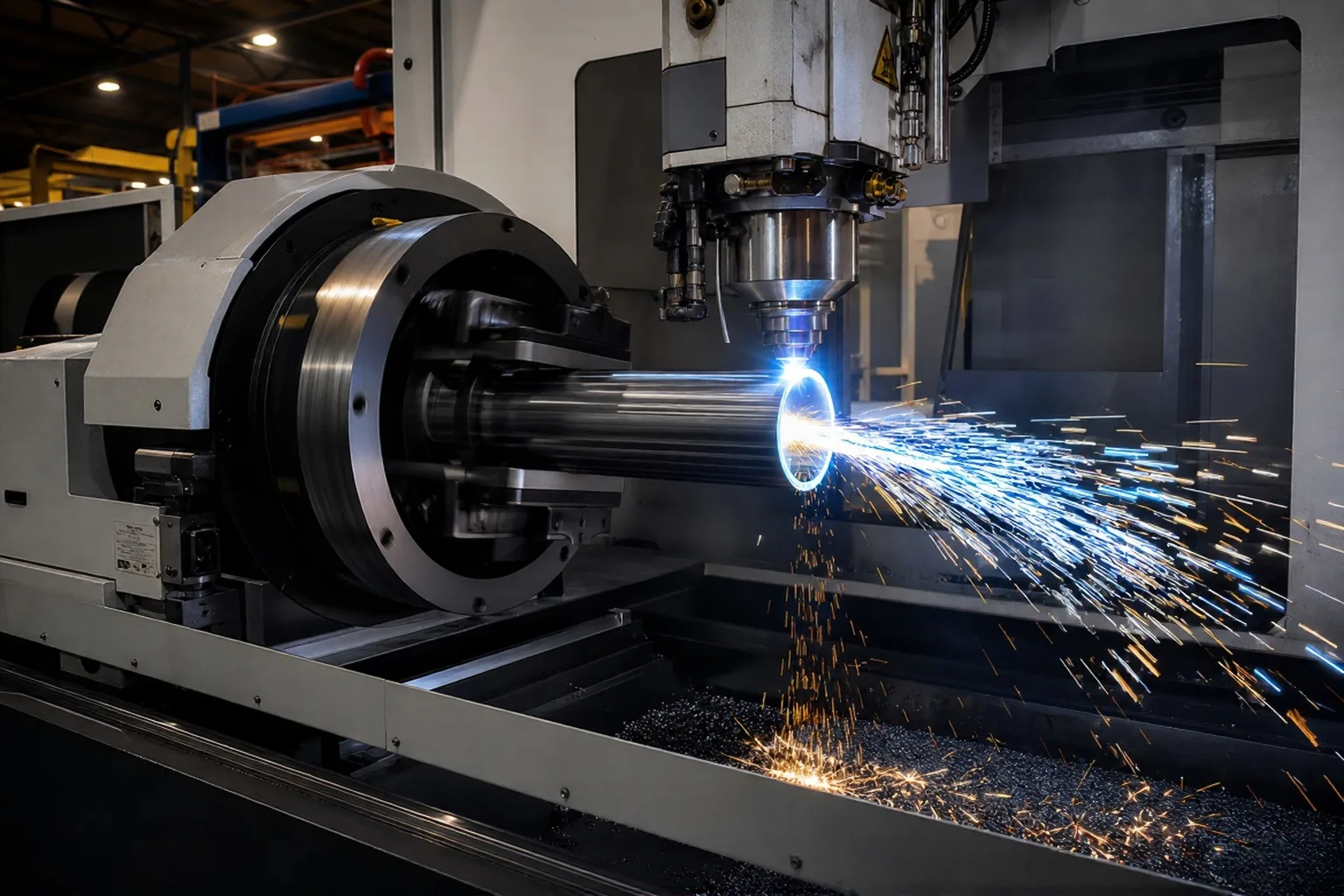
Cutting stainless steel tube with a fiber laser gives clean, burr-free edges without the tool wear you get from sawing or milling. A fiber laser runs at a 1064 nm wavelength that stainless absorbs far better than a CO2 laser’s 10.6 µm beam, so you cut faster and put less heat into the workpiece. This guide covers the machine setup, the parameters that actually move the needle, and the fixes for the problems you will hit on the shop floor.
At a glance
- Use a tube fiber laser with rotary chucks — a flatbed cannot hold the tube steady.
- Cut with nitrogen for oxide-free edges; oxygen only for thick, non-hygiene parts.
- Match power to wall thickness: ~1000 W for 1–3 mm, 3000 W for 6–8 mm.
- Always test on scrap and read the edge color before production.
What You Need Before the First Cut
Set up wrong and you waste material on the first tube. Check these four things first:
- A tube fiber laser, not a flatbed. Tube cutters use front and rear pneumatic chucks that rotate the tube through the beam. A flatbed panel cutter has no way to hold a round or square tube steady.
- Assist gas on hand. Nitrogen for clean edges, oxygen for thicker sections, compressed air for thin non-critical parts.
- Confirmed material data. Grade (304, 316, etc.), wall thickness, outer diameter, and total length. Guessing the wall thickness is the fastest way to a bad cut.
- A scrap offcut. You will run a test cut before touching good stock.
Step-by-Step: Cutting a Stainless Tube
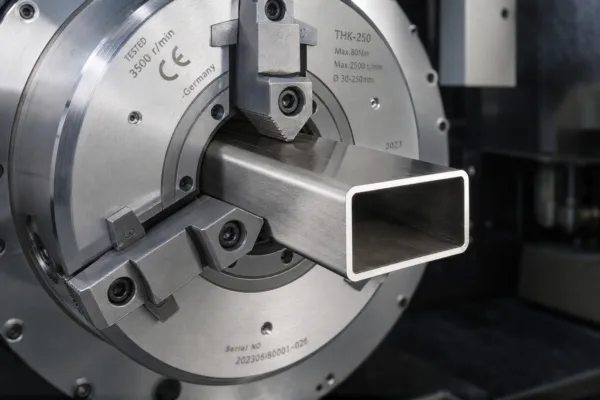
1. Load and clamp the tube
Pneumatic chucks grip the tube at both ends. Set the chuck pressure so the tube cannot rotate but the jaws do not crush thin walls. Square and rectangular tubes need the chuck rotated to match the profile, or the cut drifts off-axis.
2. Set the cutting parameters
Enter wall thickness, outer diameter, and gas type in the controller. The machine pulls a base parameter set from its library. Then adjust the five values that decide edge quality:
- Laser power — watts delivered to the cut.
- Cutting speed — feed rate in metres per minute.
- Gas pressure — bar at the nozzle.
- Focus position — on the surface or just below it.
- Nozzle diameter — usually 1.5–3.0 mm.
3. Run a test cut on scrap
Cut a short section and look at the edge. A silver-white face with no burr means the nitrogen settings are right. A brown or blue oxide skin means you are on oxygen or the gas pressure is too low.
4. Run production
Start the program. The chucks rotate the tube while the cutting head moves on X/Y to profile the cut — holes, slots, miters, or end contours. A 6 m tube typically leaves two short remnants at the chuck ends; plan the nest so those fall on scrap, not paid length.
5. Unload and finish
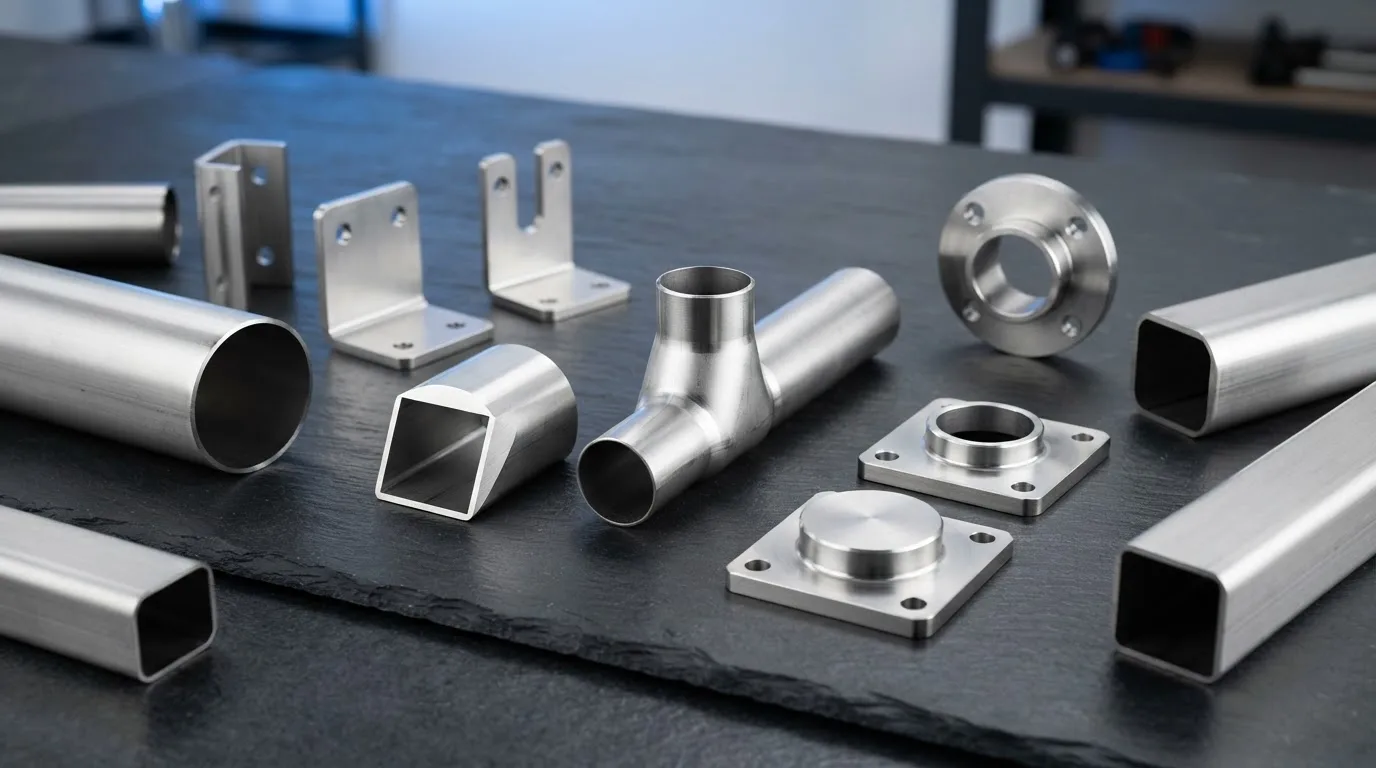
Drop the parts, remove the tail (the remnant between cuts), and deburr by hand only if needed. A good nitrogen cut usually ships as-is.
Parameters That Decide Edge Quality
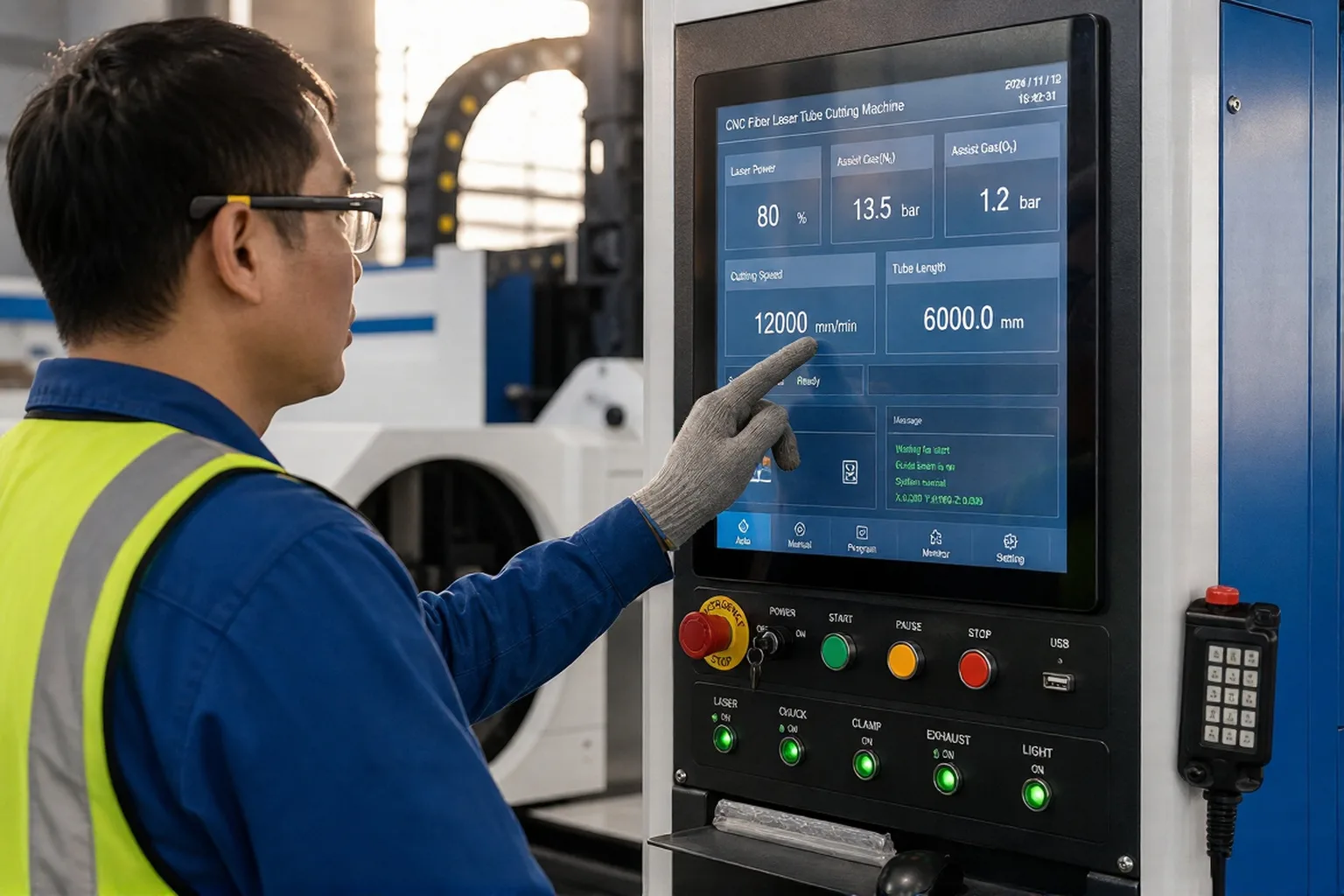
These speeds are for nitrogen cutting of 304/316 stainless and assume clean gas and a sound nozzle. Your machine’s parameter library may differ — treat this as a starting point, not a spec sheet.
| Laser power | Wall thickness | Approx. speed (N₂) | Gas pressure |
|---|---|---|---|
| 1000 W | 1 mm | 6–9 m/min | 10–15 bar |
| 1000 W | 2 mm | 2.5–4 m/min | 12–18 bar |
| 2000 W | 3 mm | 3–4.5 m/min | 12–18 bar |
| 3000 W | 4 mm | 2.5–4 m/min | 14–20 bar |
| 3000 W | 6 mm | 1.2–2 m/min | 16–22 bar |
| 6000 W | 8 mm | 1–1.8 m/min | 18–25 bar |
| 6000 W | 10 mm | 0.6–1 m/min | 20–25 bar |
Gas: nitrogen, oxygen, or air
- Nitrogen — oxide-free, keeps the passivation layer intact. Required for food, medical, pharma, and outdoor or welded tubing. Pressure 10–25 bar.
- Oxygen — cuts thicker tube cheaper but leaves an oxide layer you must grind off before welding or where hygiene matters.
- Air — cheapest, for thin non-critical parts. The edge oxidizes lightly.
Fiber Laser vs CO2 for Stainless Tubes
| Factor | Fiber laser (1064 nm) | CO2 laser (10.6 µm) |
|---|---|---|
| Stainless absorption | High — cuts faster | Lower — more reflected power |
| Edge on nitrogen | Silver-white, burr-free | Clean but slower |
| Moving parts | Diode source, little maintenance | Mirrors and gas lasers, more upkeep |
| Tube handling | Built for rotary chucks | Rarely tube-configured |
| Running cost | Lower per metre | Higher |
Common Problems and How to Fix Them
- Burrs on the bottom edge. Raise gas pressure, lower speed, or drop focus 0.5–1 mm.
- Dross stuck to the cut. Add power or slow the feed, and check the nozzle for damage or spatter.
- Thin-wall tube deforms. Lower chuck pressure, add a steady rest, and raise speed to cut before heat builds.
- Too much tail waste. Nest parts to leave a smaller remnant and recover offcuts for fittings.
- Yellow or blue edge. You are on oxygen or the N₂ pressure is low — switch gas or push pressure to 18–25 bar.
Sık Sorulan Sorular
Can a fiber laser cut thick stainless steel tube?
Yes. At 3000 W you cut roughly 8 mm wall; at 6000 W you reach 10–12 mm. Beyond that, plasma or a dedicated tube saw is cheaper per cut. The real limit depends on gas and tube diameter, not just watts.
Nitrogen or oxygen for stainless tube?
Nitrogen when the edge must stay oxide-free — food, medical, and structural welds. Oxygen for thick, non-hygiene parts where gas cost beats edge quality.
Why are my cuts leaving burrs?
Low gas pressure and too-high speed cause most burrs. Raise N₂ to 15–25 bar and slow the feed, then re-test on scrap before running stock.
Do I need a special machine for tubes?
Yes — a tube fiber laser with rotary chucks. A flatbed cannot hold the tube through the cut. Some shops bolt a tube attachment to a flatbed, but a purpose-built tube cutter holds tolerance better.
What wall thickness can a 1000 W fiber laser cut?
About 1–3 mm stainless wall at useful speeds on nitrogen. For 4 mm and above, move to 2000–3000 W.
Sonuç
Cutting stainless steel tube with a fiber laser comes down to three choices: the right machine (a tube cutter with chucks), the right gas (nitrogen for clean edges), and the right parameters (power, speed, focus). Test on scrap, read the edge color, and adjust before production. Get those right and you ship parts that need no deburring.
POPÜLER YAZILAR
- Cold Saw vs Band Saw: Which for Tube and Profile? A Factory Guide
- Laser Tube Cutting Thickness and Speed: Real Specs from the Factory
- Tube Laser Cutting Machine Price: A Factory Guide to Cost and Quotes
- Fiber Lazerle Paslanmaz Çelik Borular Nasıl Kesilir?
- Vaka Çalışması: Alman Mobilya Üreticisi, CHITTAK ile Kurulum Süresini % Oranında Kısalttı
