
Como cortar tubos de aço inoxidável com um laser de fibra
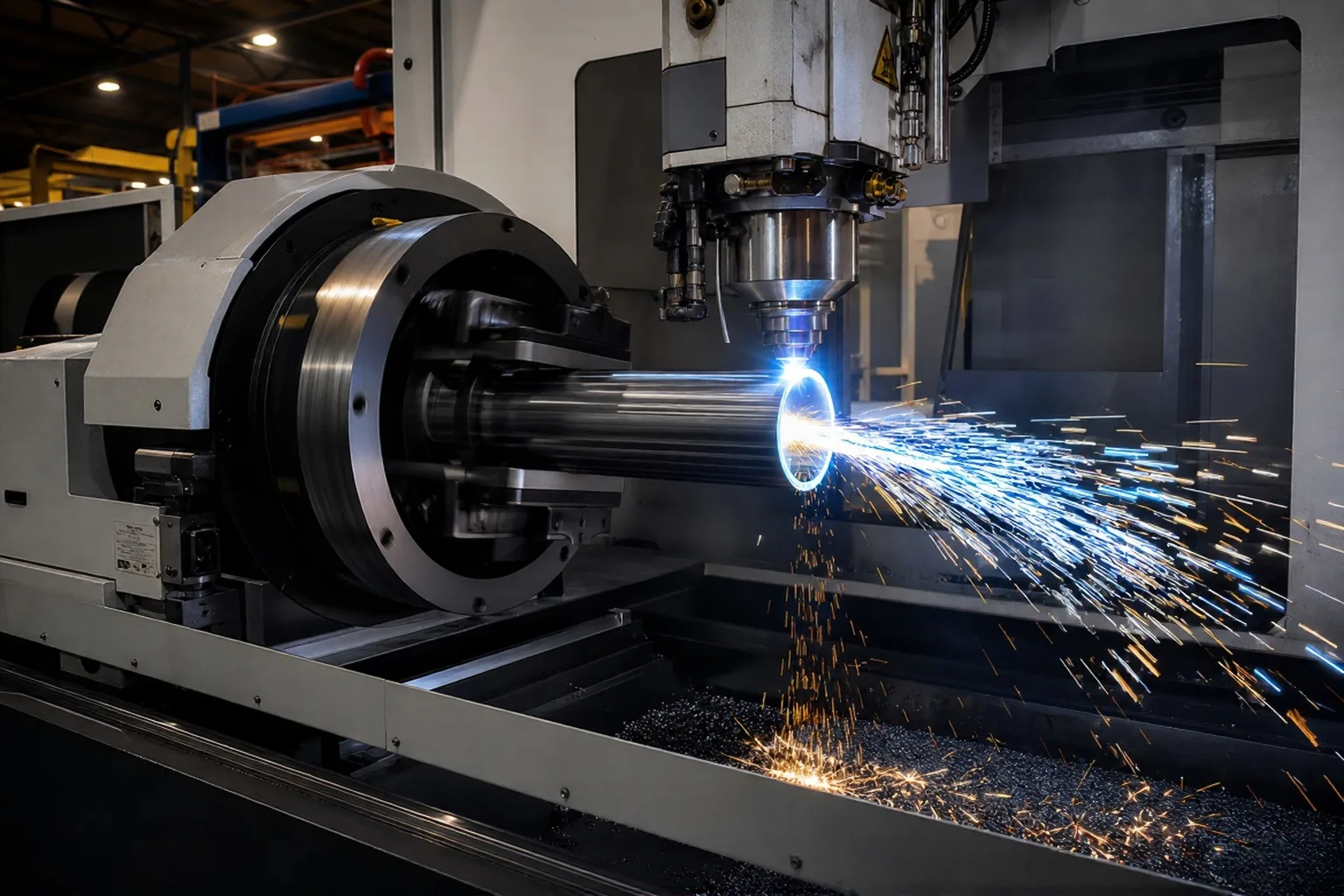
O corte de tubos de aço inoxidável com um laser de fibra proporciona arestas limpas e sem rebarbas, sem o desgaste das ferramentas que se verifica no corte com serra ou na fresagem. Um laser de fibra opera num comprimento de onda de 1064 nm, que o aço inoxidável absorve muito melhor do que o feixe de 10,6 µm de um laser de CO₂, pelo que o corte é mais rápido e gera menos calor na peça de trabalho. Este guia aborda a configuração da máquina, os parâmetros que realmente fazem a diferença e as soluções para os problemas com que se deparará na oficina.
Em resumo
- Utilize um laser de fibra em tubo com mandris rotativos — uma mesa plana não consegue manter o tubo estável.
- Cortar com azoto para arestas sem óxido; oxigénio apenas para peças espessas e não destinadas à higiene.
- Jogo potência em relação à espessura da parede: ~1000 W para 1–3 mm, 3000 W para 6–8 mm.
- Sempre teste em material de sucata e verificar a cor da borda antes da produção.
O que é preciso antes do primeiro corte
Se a configuração estiver errada, vai desperdiçar material logo no primeiro tubo. Verifique primeiro estes quatro aspetos:
- Um laser de fibra tubular, e não um laser de base plana. Os cortadores de tubos utilizam mandris pneumáticos dianteiros e traseiros que fazem girar o tubo através da viga. Um cortador de painéis de mesa plana não dispõe de qualquer meio para manter um tubo redondo ou quadrado imobilizado.
- Gás de assistência disponível. Azoto para arestas limpas, oxigénio para secções mais espessas, ar comprimido para peças finas e não críticas.
- Dados do material confirmados. Tipo (304, 316, etc.), espessura da parede, diâmetro exterior e comprimento total. Adivinhar a espessura da parede é a forma mais rápida de obter um corte mal feito.
- Um pedaço de sucata. Deve fazer um corte de teste antes de utilizar o material de qualidade.
Passo a passo: Como cortar um tubo de aço inoxidável
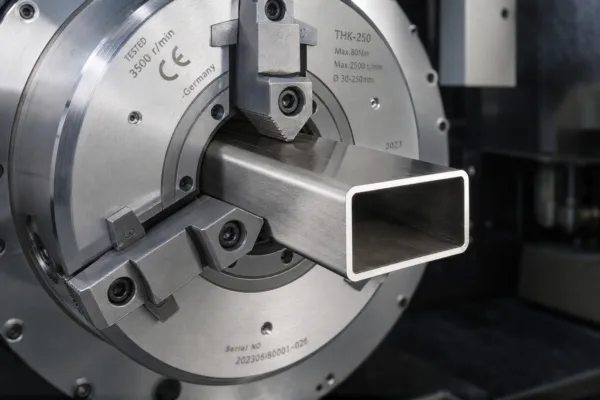
1. Colocar o tubo e fixá-lo
Os mandris pneumáticos prendem o tubo em ambas as extremidades. Regule a pressão do mandril de forma a que o tubo não possa rodar, mas sem que as garras esmaguem as paredes finas. No caso de tubos quadrados e retangulares, é necessário rodar o mandril para se adaptar ao perfil; caso contrário, o corte fica desalinhado em relação ao eixo.
2. Definir os parâmetros de corte
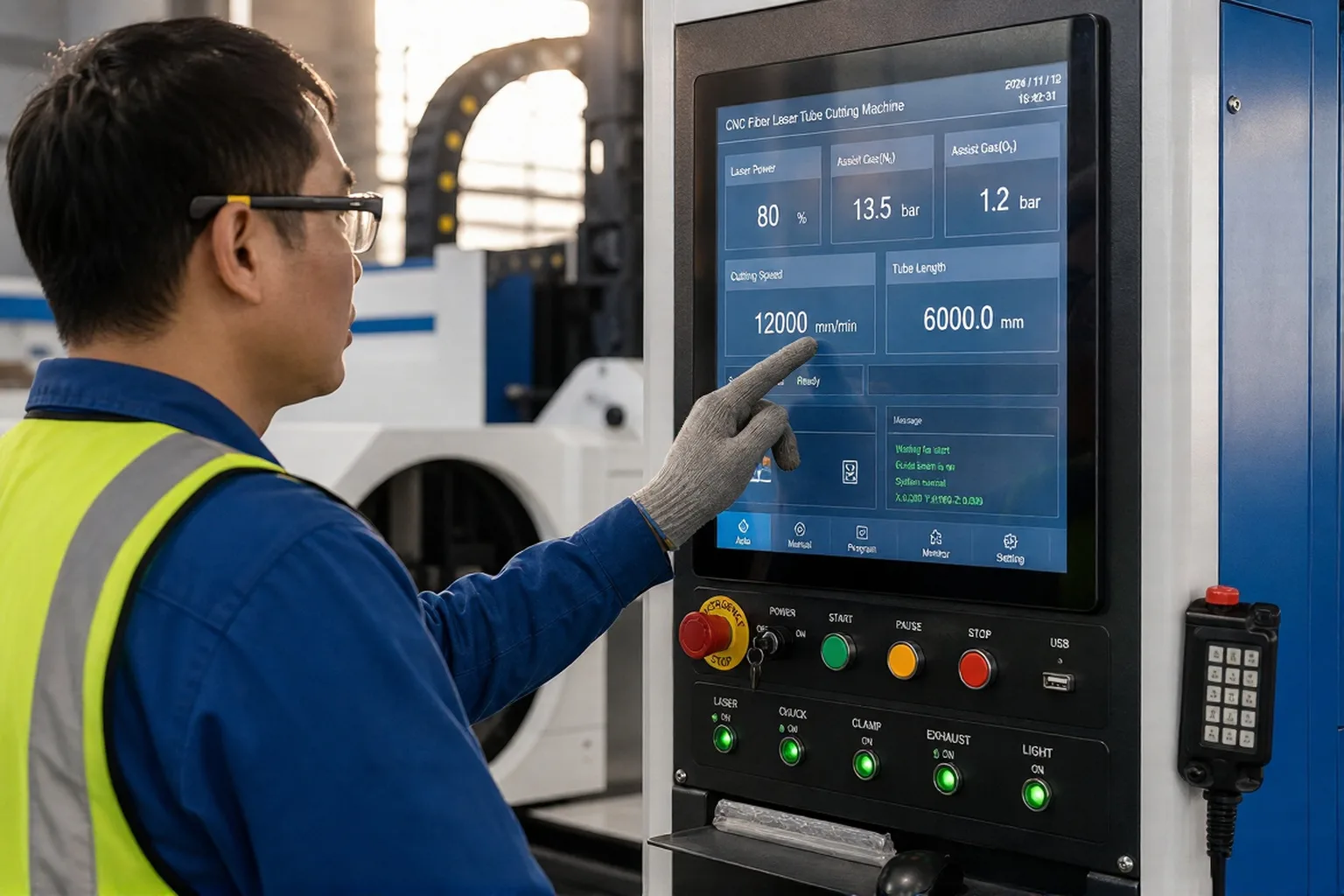
Introduza a espessura da parede, o diâmetro exterior e o tipo de gás no controlador. A máquina recupera um conjunto de parâmetros de base da sua biblioteca. Em seguida, ajuste os cinco valores que determinam a qualidade das arestas:
- Potência do laser — watts fornecidos ao corte.
- Velocidade de corte — velocidade de avanço em metros por minuto.
- Pressão do gás — barra no bico.
- Posição de focagem — na superfície ou logo abaixo dela.
- Diâmetro do bico — normalmente entre 1,5 e 3,0 mm.
3. Faça um corte de teste num pedaço de material de desperdício
Corte um pequeno pedaço e observe a borda. Uma superfície branco-prateada sem rebarbas significa que as configurações de azoto estão corretas. Uma camada de óxido castanha ou azul significa que está a utilizar oxigénio ou que a pressão do gás está demasiado baixa.
4. Colocar em produção
Inicie o programa. Os mandris fazem girar o tubo enquanto a cabeça de corte se desloca nos eixos X/Y para definir o perfil do corte — orifícios, ranhuras, cortes em ângulo ou contornos nas extremidades. Um tubo de 6 m deixa normalmente dois restos curtos nas extremidades do mandril; planeie a disposição dos peças de forma a que estes fiquem na zona de desperdício e não no comprimento faturado.
5. Descarregar e concluir
Coloque as peças no chão, retire a ponta (o resíduo entre os cortes) e elimine as rebarbas manualmente apenas se for necessário. Um bom corte a azoto é normalmente enviado tal como está.
Parâmetros que determinam a qualidade das arestas
Estas velocidades aplicam-se ao corte com azoto de aço inoxidável 304/316 e pressupõem gás limpo e um bico em bom estado. A biblioteca de parâmetros da sua máquina pode diferir — considere estas informações como um ponto de partida e não como uma ficha técnica.
| Potência do laser | Espessura da parede | Velocidade aproximada (N₂) | Pressão do gás |
|---|---|---|---|
| 1000 W | 1 mm | 6–9 m/min | 10–15 bar |
| 1000 W | 2 mm | 2,5–4 m/min | 12–18 bar |
| 2000 W | 3 mm | 3–4,5 m/min | 12–18 bar |
| 3000 W | 4 mm | 2,5–4 m/min | 14–20 bar |
| 3000 W | 6 mm | 1,2–2 m/min | 16–22 bar |
| 6000 W | 8 mm | 1–1,8 m/min | 18–25 bar |
| 6000 W | 10 mm | 0,6–1 m/min | 20–25 bar |
Gás: azoto, oxigénio ou ar
- Azoto — sem óxidos, mantém a camada de passivação intacta. Necessário para tubos destinados aos setores alimentar, médico e farmacêutico, bem como para tubos para uso no exterior ou soldados. Pressão: 10–25 bar.
- Oxigénio — corta tubos mais grossos a um custo mais baixo, mas deixa uma camada de óxido que é necessário remover por esmerilagem antes da soldadura ou em situações em que a higiene é importante.
- Ar — a mais barata, para peças finas e não críticas. A aresta sofre uma ligeira oxidação.
Laser de fibra vs. CO₂ para tubos de aço inoxidável
| Fator | Laser de fibra (1064 nm) | Laser de CO₂ (10,6 µm) |
|---|---|---|
| Absorção em aço inoxidável | Alta — corta mais depressa | Mais baixo — maior potência refletida |
| Vantagem no azoto | Branco-prateado, sem rebarbas | Mais limpo, mas mais lento |
| Peças móveis | Fonte de díodos, pouca manutenção | Espelhos e lasers a gás, mais manutenção |
| Manuseamento de tubos | Concebido para mandris rotativos | Raramente com configuração em tubo |
| Custos de funcionamento | Preço por metro mais baixo | Mais alto |
Problemas comuns e como resolvê-los
- Rebarbas na borda inferior. Aumente a pressão do gás, reduza a velocidade ou diminua a distância focal em 0,5–1 mm.
- A escória ficou presa no corte. Aumente a potência ou reduza a velocidade de alimentação e verifique se o bico apresenta danos ou salpicos.
- O tubo de parede fina deforma-se. Reduza a pressão do mandril, coloque um apoio fixo e aumente a velocidade de corte antes que se acumule calor.
- Há demasiado desperdício na cauda. Encaixe as peças de forma a deixar um resíduo mais pequeno e recupere os retalhos para as peças de acabamento.
- Borda amarela ou azul. Está a receber oxigénio ou a pressão de N₂ está baixa — mude de gás ou aumente a pressão para 18–25 bar.
Perguntas frequentes
Um laser de fibra consegue cortar tubos de aço inoxidável de grande espessura?
Sim. A 3000 W, consegue-se cortar uma parede com cerca de 8 mm de espessura; a 6000 W, chega-se aos 10–12 mm. Para além disso, o corte a plasma ou com uma serra de tubo específica sai mais barato por corte. O limite real depende do gás e do diâmetro do tubo, e não apenas da potência em watts.
Azoto ou oxigénio para tubos de aço inoxidável?
Azoto quando a aresta tem de permanecer isenta de óxido — soldaduras para o setor alimentar, médico e estrutural. Oxigénio para peças espessas e não destinadas a fins de higiene, em que o custo do gás se sobrepõe à qualidade da aresta.
Porque é que os meus cortes ficam com rebarbas?
A baixa pressão do gás e uma velocidade demasiado elevada são as principais causas da formação de rebarbas. Aumente a pressão de N₂ para 15–25 bar e reduza a velocidade de avanço; em seguida, volte a testar em material de desperdício antes de processar a peça.
Preciso de uma máquina especial para tubos?
Sim — um laser de fibra para tubos com mandris rotativos. Uma máquina de corte plana não consegue segurar o tubo durante o corte. Algumas oficinas aparafusam um acessório para tubos a uma máquina de corte plana, mas uma máquina de corte de tubos concebida especificamente para o efeito mantém melhor as tolerâncias.
Que espessura de parede pode um laser de fibra de 1000 W cortar?
Cerca de 1–3 mm de espessura da parede em aço inoxidável a velocidades úteis com nitrogénio. Para 4 mm e mais, aumente a potência para 2000–3000 W.
Conclusão
O corte de tubos de aço inoxidável com um laser de fibra resume-se a três opções: a máquina certa (um cortador de tubos com mandris), o gás certo (azoto para arestas limpas) e os parâmetros certos (potência, velocidade, foco). Faça um teste em sucata, observe a cor da aresta e ajuste antes de iniciar a produção. Se acertar nestes aspetos, poderá enviar peças que não necessitam de rebarbação.
PUBLICAÇÕES MAIS POPULARES
- Cold Saw vs Band Saw: Which for Tube and Profile? A Factory Guide
- Laser Tube Cutting Thickness and Speed: Real Specs from the Factory
- Tube Laser Cutting Machine Price: A Factory Guide to Cost and Quotes
- Como cortar tubos de aço inoxidável com um laser de fibra
- Estudo de caso: Fabricante alemão de mobiliário reduziu o tempo de preparação em 73% com a CHITTAK
