
Tube Laser Cutting vs Plasma Cutting: 7 Critical Differences (2026)
Tube Laser Cutting vs Plasma Cutting: 7 Critical Differences (2026)
管材激光切割与等离子切割:7 个关键区别(2026)
Introduction
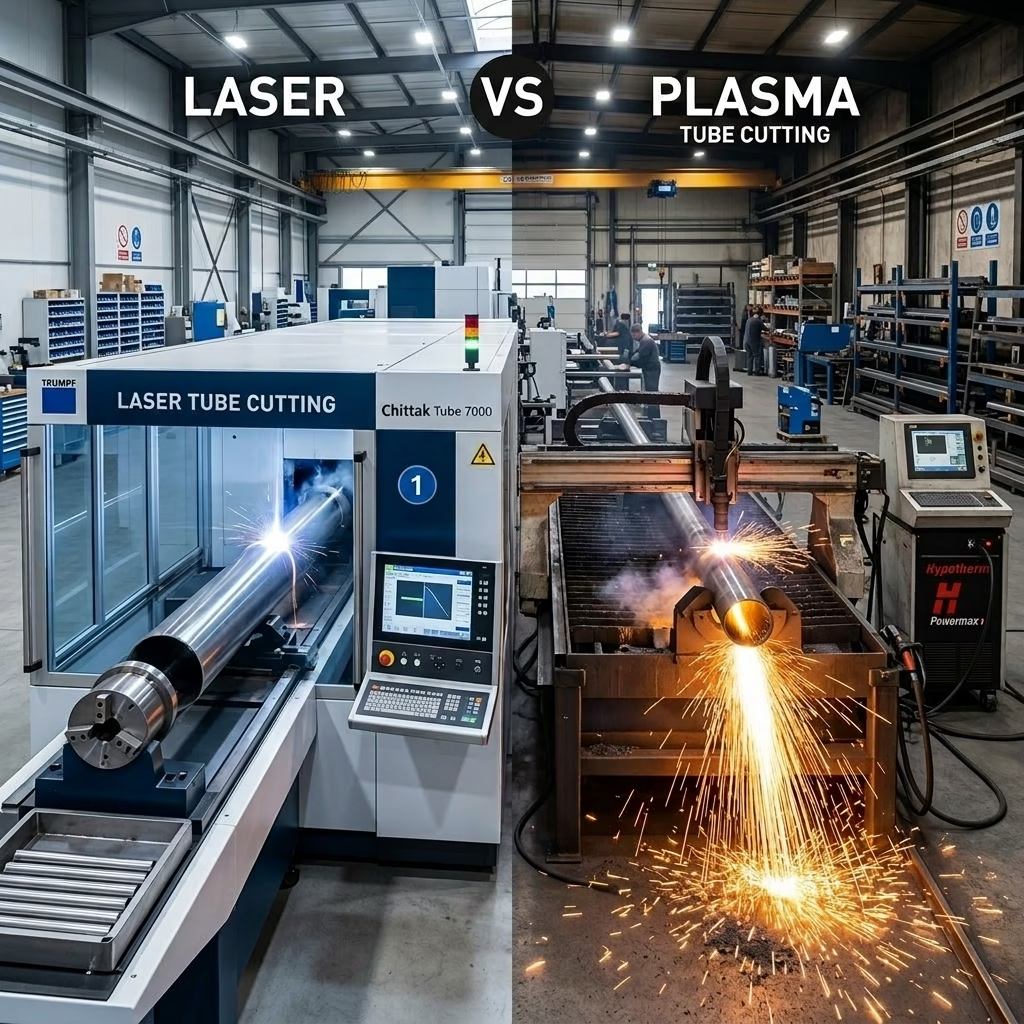
In the dynamic world of metal fabrication, selecting the right cutting technology is paramount for efficiency, quality, and profitability. For businesses involved in tube processing, the choice often narrows down to two dominant methods: tube laser cutting vs plasma cutting. Both technologies offer distinct advantages and disadvantages, making the decision complex for plant owners, procurement managers, and production supervisors in 2026. This comprehensive guide will delve into seven critical differences, providing a detailed comparison to help you make an informed decision for your specific operational requirements.
Cutting Technology and Process
Understanding the fundamental mechanisms of plasma vs laser cutting is the first step in appreciating their operational differences and capabilities.
How Plasma Tube Cutting Works
Plasma tube cutting utilizes a high-velocity jet of ionized gas, or plasma, to melt and sever the metal. An electrical arc is generated between an electrode and the workpiece, ionizing a gas (such as oxygen, nitrogen, or air) to create a superheated plasma stream. This stream, reaching temperatures upwards of 20,000°C, rapidly melts the metal, while the high velocity of the gas expels the molten material from the kerf. This process is highly effective for conductive metals and is a robust solution for various cutting tasks.
How Laser Tube Cutting Works
Laser tube cutting employs a focused beam of high-power monochromatic light (laser) to heat and melt material in a localized area. The laser beam is generated by a resonator, guided through optics, and focused by a lens onto the tube’s surface. A coaxial assist gas (like oxygen for mild steel or nitrogen for stainless steel and aluminum) is simultaneously delivered to blow away the molten material and cool the cutting zone. The precision and energy density of the laser allow for very fine cuts and intricate geometries.
The Fundamental Process Difference
The core difference lies in the energy source and material removal mechanism. Plasma cutting uses an electrically conductive, superheated gas stream to melt and blow away material, while laser cutting uses a highly focused light beam to melt or vaporize material, often assisted by gas. This distinction is crucial as it directly impacts cut quality, precision, and the types of materials and thicknesses each technology excels at.
Cut Quality and Edge Finish
The quality of the cut edge is often a primary concern for manufacturers, directly influencing subsequent processing steps like welding and finishing.
Heat-Affected Zone Comparison
The Heat-Affected Zone (HAZ) is the area of material whose microstructure and properties have been altered by the heat of the cutting process. Plasma cutting generally produces a wider HAZ due to the larger, less focused heat source and higher overall heat input. In contrast, laser tube cutting, with its highly concentrated beam, creates a significantly smaller HAZ, minimizing material distortion and metallurgical changes. This difference is particularly important for high-strength steels and applications requiring minimal post-processing.
Edge Cleanliness and Burr Formation
When comparing plasma cutter vs laser, laser cutting consistently delivers superior edge cleanliness. Laser-cut edges are typically smooth, burr-free, and require little to no secondary finishing. Plasma cutting, especially on thicker materials, can result in a more angular edge with dross and burrs that may necessitate deburring or grinding. This impacts overall production time and labor costs.
Surface Finish Standards
The surface finish of a cut edge is crucial for aesthetic and functional purposes. Laser cutting provides a remarkably smooth and fine surface finish, often achieving roughness values that meet stringent industry standards without further treatment. Plasma-cut surfaces, while acceptable for many applications, generally exhibit a rougher finish due to the nature of the cutting process.
Weld-Ready Edge Preparation
For many tube fabrication projects, cut edges need to be ready for welding. Laser cutting excels here, providing edges that are consistently square, clean, and free of oxidation or slag, making them ideal for immediate welding. Plasma cut edges, especially on thicker materials, might require additional preparation to remove dross and ensure a clean, consistent weld joint. Chittak’s laser cutting systems are designed to deliver weld-ready edges directly from the machine.
Cutting Precision and Accuracy
Precision and accuracy are critical factors, particularly for components requiring tight tolerances and intricate designs.
Kerf Width: Plasma vs Laser
The kerf width refers to the amount of material removed by the cutting process. Laser cutting produces a significantly narrower kerf compared to plasma cutting. A narrower kerf means less material waste and the ability to cut more intricate geometries and closer nesting of parts, optimizing material utilization. The fine kerf of laser technology is a major advantage for precision parts.
Tolerance Capabilities for Tube Fabrication
When considering tube laser vs plasma for precision, laser cutting offers superior tolerance capabilities. Modern laser tube cutting machines can achieve tolerances in the range of ±0.05 mm, making them suitable for high-precision applications where components must fit together perfectly without additional machining. Plasma cutting typically has wider tolerances, usually in the range of ±0.5 mm to ±1.5 mm, depending on the material thickness and machine.
Small Hole and Slot Cutting Ability
For small holes and intricate slots, laser cutting is the undisputed winner. The focused laser beam can create very small, clean holes and tight radius cuts that are simply not achievable with plasma technology due to its wider kerf and less focused energy. This capability is vital for components with complex ventilation, interlocking features, or lightweighting designs.
Geometric Complexity in 3D Cutting
Both technologies can handle 3D cutting to some extent, but laser cutting offers greater versatility and precision for complex geometries. Multi-axis laser tube cutters can create highly intricate shapes, bevels, and features on tubes with exceptional accuracy. While plasma systems can also perform some angled cuts, the control over the geometry is generally less precise than with laser technology, especially for tight corners and variable bevels. 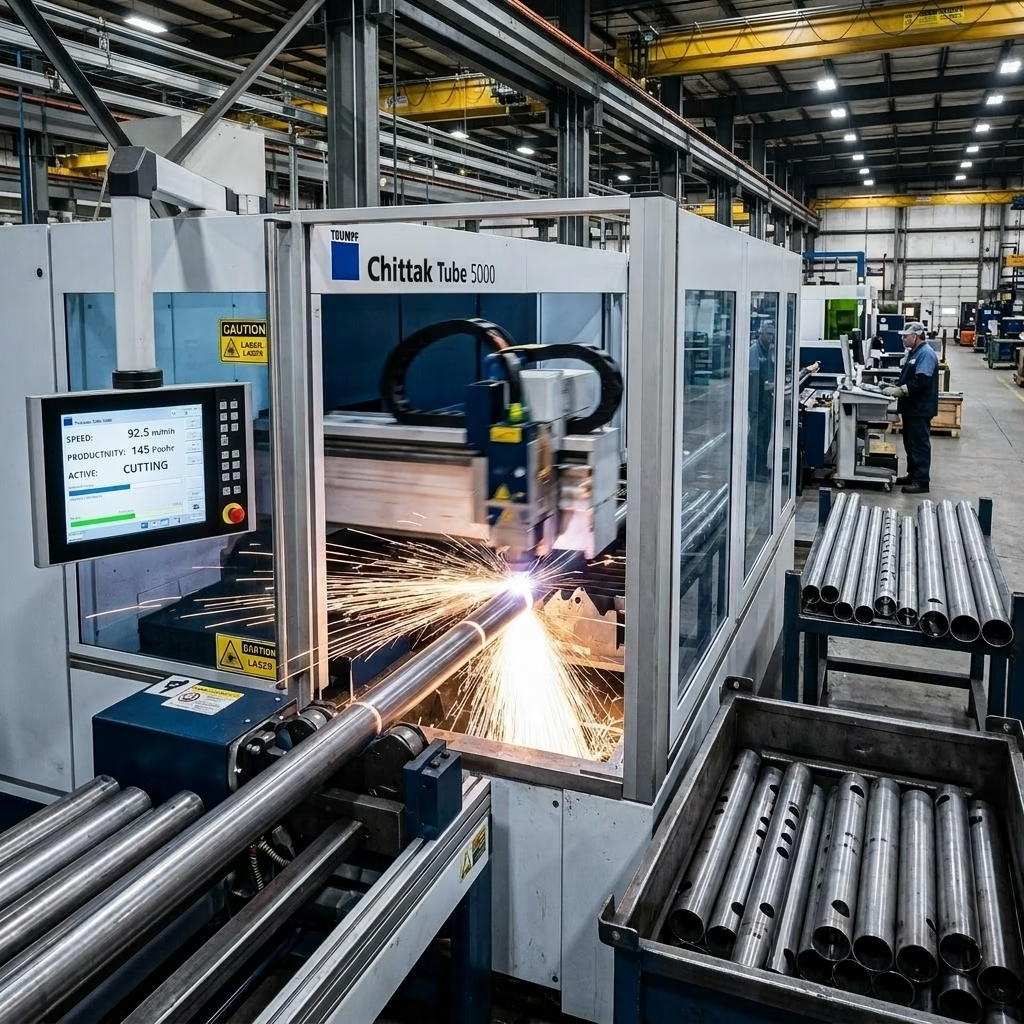
Material Thickness and Diameter Range
The range of materials and tube dimensions that each technology can effectively process is a key consideration for diverse manufacturing operations.
Optimal Thickness Range for Each Technology
Plasma cutting generally excels at cutting thicker metals. It is often the preferred choice for tubes with significant wall thicknesses where the slight reduction in precision is outweighed by speed and cost-effectiveness. CNC laser vs plasma comparison shows that laser cutting is optimal for thin to medium-thick materials, offering unparalleled precision and speed. While high-power lasers can cut thicker materials, plasma remains more economical for very thick sections.
Tube Diameter Limitations
Both technologies have specific tube diameter limitations based on the machine’s design and chuck capabilities. Plasma cutting systems are often more adaptable to a wider range of larger diameter tubes, sometimes even irregularly shaped ones, due to the less restrictive nature of the cutting head. Laser tube cutting machines are highly specialized for tubes and typically have defined maximum and minimum diameter capacities designed for precision rotation and handling.
Wall Thickness Considerations
For thin-walled tubes, laser cutting is ideal due to its minimal HAZ and precise energy delivery, preventing distortion. For thicker walls, plasma cutting offers a robust solution. However, the quality of the plasma cut edge might degrade as wall thickness increases, requiring more post-processing. Laser technology maintains high quality across its optimal thickness range.
Inner Wall Protection During Cutting
During plasma tube cutting, the intense heat and molten metal can sometimes cause spatter or damage to the inner wall of the tube, especially if the tube is small in diameter or has sensitive internal features. Laser cutting, with its focused energy and efficient assist gas removal, is much less prone to causing internal damage or spatter, preserving the integrity of the tube’s inner surface.
Cutting Speed and Productivity
Speed and overall productivity are critical for meeting production targets and managing operational costs.
Speed Comparison Across Different Thicknesses
For thin to medium-thick materials, laser tube cutting is generally significantly faster than plasma cutting, delivering higher linear cutting speeds. The efficiency of the focused laser beam allows for rapid material removal. As material thickness increases, the speed advantage of laser cutting diminishes, and plasma cutting can become comparable or even faster for very thick sections, albeit with potential compromises in cut quality. 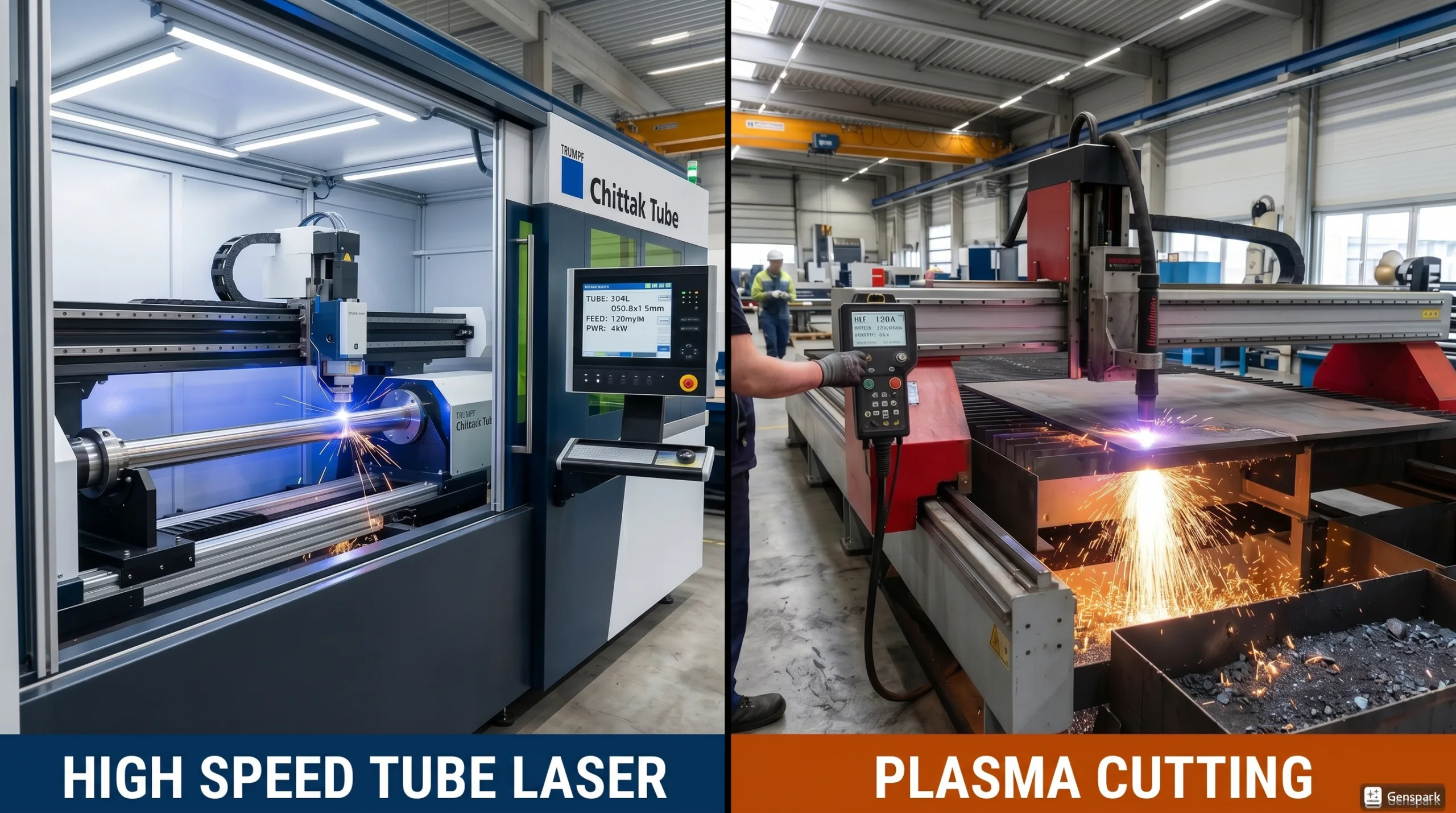
Production Throughput for Tube Fabrication
Overall production throughput for tube fabrication is influenced not just by cutting speed but also by setup times, material handling, and post-processing requirements. Laser cutting’s ability to produce weld-ready, burr-free parts often means less secondary processing, leading to higher overall throughput despite potentially slower speeds on very thick materials. Plasma cutting systems, while fast on thick materials, might incur additional time for deburring and edge preparation.
Multi-Operation Capability on Single Setup
Modern laser tube cutting machines offer advanced capabilities such as nesting, bevelling, tapping, and marking, all on a single setup. This multi-operation capability significantly enhances productivity by reducing material handling and subsequent machining operations. While some plasma systems offer bevelling, the integration of multiple complex operations within a single setup is typically more advanced and precise on laser cutting platforms.
Equipment Design and Versatility
The physical design and inherent versatility of the equipment play a significant role in integration into existing workflows and the range of applications.
Cutting Head Size and Accessibility
Plasma cutting heads are generally larger and can be less nimble than laser cutting heads, especially in confined spaces or for intricate internal cuts on tubes. Laser cutting heads are compact and designed for precise movement, allowing for greater accessibility and the ability to cut complex internal features and tight corners without interference.
Section Profile Compatibility
Both technologies can cut various tube section profiles, including round, square, rectangular, and oval. However, advanced laser tube cutting systems, like those offered by Chittak, often boast sophisticated chuck and clamping systems that can handle a wider array of irregular or open profiles with high precision, ensuring stable processing. Plasma tube cutting is also versatile but may require more specialized fixturing for non-standard profiles to maintain accuracy.
Chamfering and Notching Capabilities
Laser tube cutting machines excel at integrated chamfering and notching, producing precise angles and complex joint preparations directly on the machine. This eliminates the need for separate operations and significantly reduces setup times. While plasma cutting can perform some chamfering, the accuracy and range of angles are generally superior with laser technology, especially for tight tolerances and consistent quality across production runs.
Chittak Systems Integration Options
Chittak, a leader in laser cutting technology, offers advanced systems with comprehensive integration options. Our laser tube cutting machines can be seamlessly integrated into automated production lines, featuring automated loading and unloading systems, robotic handling, and connectivity with CAD/CAM software. This allows for streamlined workflows, reduced manual labor, and increased overall plant efficiency, positioning us at the forefront of the tube laser vs plasma debate. 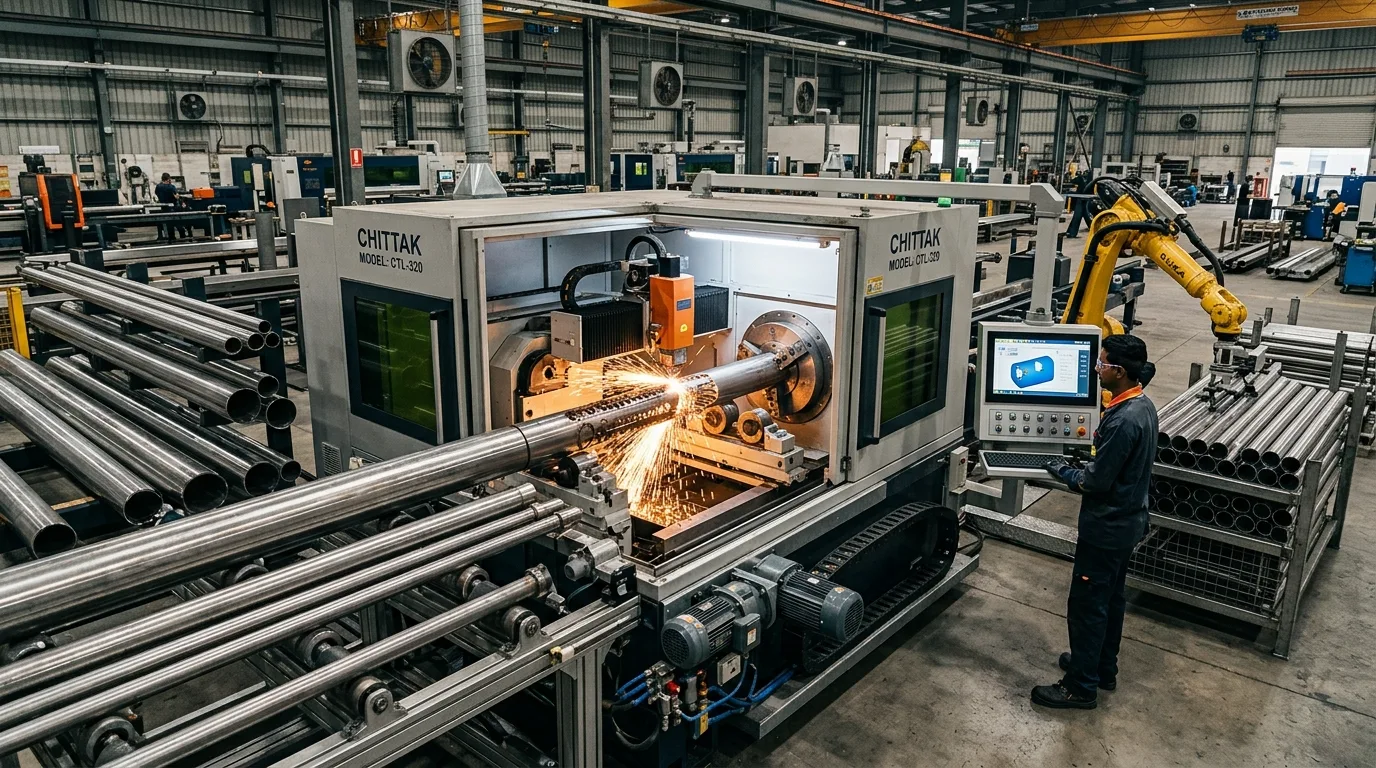
Operating Efficiency and Maintenance
Beyond initial investment, the long-term operating costs and maintenance requirements are crucial for total cost of ownership.
Energy Consumption Comparison
Generally, plasma cutting systems consume more electrical energy than laser cutting systems, especially when considering the power required for the plasma torch and the associated air compressors. Modern fiber laser cutting systems, in particular, are highly energy-efficient, converting a significant portion of electrical energy into the laser beam, leading to lower operating costs over time. This makes the tube laser vs plasma energy consumption a critical factor for long-term operational expenses.
Consumable Requirements and Lifespan
Plasma cutting requires several consumables, including electrodes, nozzles, and shields, which have a finite lifespan and need regular replacement. These consumable costs can add up significantly, especially in high-volume production environments. Laser cutting also has consumables (nozzles, optics, assist gases), but their lifespan and cost are often more predictable and, in many cases, lower than plasma consumables, particularly for fiber lasers.
Maintenance Complexity
The maintenance complexity varies between the two. Plasma systems require routine cleaning of the torch and replacement of consumables, which is relatively straightforward. Laser systems, especially those with complex optical paths, can require more specialized maintenance and calibration, though modern fiber lasers have largely reduced this complexity due to their robust design and sealed optical path. Regular preventive maintenance is key for both.
Equipment Reliability and Uptime
Both technologies have achieved high levels of reliability. However, laser cutting systems, particularly fiber lasers, are known for their robust design and minimal downtime when properly maintained. Plasma systems are also reliable but can experience more frequent interruptions for consumable replacement. Chittak focuses on building durable and reliable laser systems to maximize uptime for our customers, a vital consideration when evaluating plasma cutter vs laser for continuous operations. 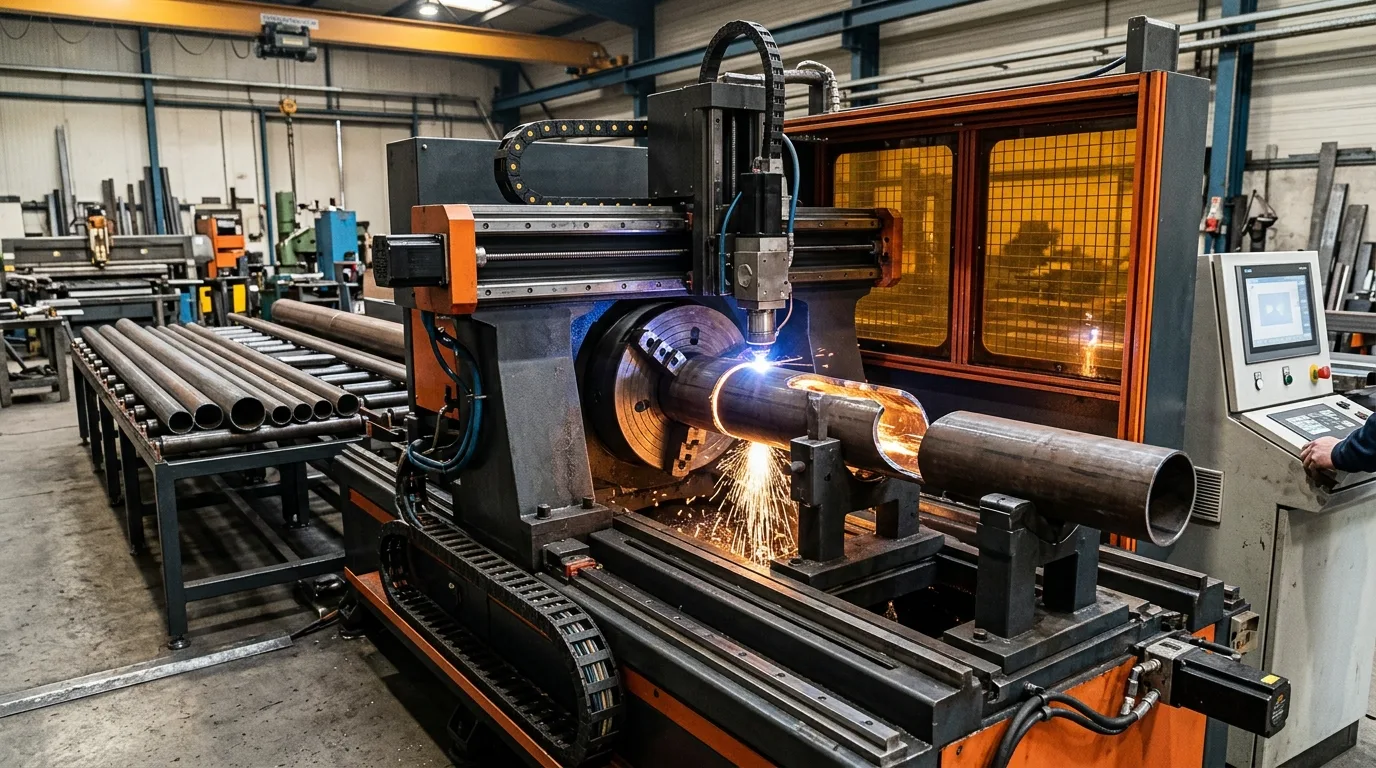
Conclusion
Choosing between tube laser cutting vs plasma cutting in 2026 involves a detailed evaluation of numerous factors, including cut quality, precision, material range, speed, versatility, and operating costs. While plasma cutting offers a cost-effective and robust solution for thicker materials and less stringent precision requirements, laser cutting stands out for its superior precision, finer cut quality, minimal HAZ, and greater versatility, especially for intricate designs and thinner to medium-thick tubes. For manufacturers prioritizing high-quality finishes, tight tolerances, and efficient multi-operation capabilities, laser tube cutting, particularly with advanced systems from Chittak, often presents the more advantageous long-term investment.
Ultimately, the best choice depends on your specific applications, production volume, material types, and desired quality standards. A thorough analysis of these seven critical differences will guide you in selecting the technology that best aligns with your strategic objectives and operational demands.
FAQ
What is the main difference in cut quality between tube laser cutting vs plasma cutting?
Laser cutting offers significantly higher cut quality with smoother edges, minimal burr formation, and a smaller heat-affected zone compared to plasma cutting, which typically produces a rougher edge and wider HAZ.
Which technology is better for cutting thick-walled tubes: plasma vs laser?
Plasma cutting is generally more cost-effective and efficient for cutting very thick-walled tubes, while laser cutting excels in thin to medium-thick materials with high precision.
Can both plasma and laser cutting perform 3D tube cutting?
Yes, both can perform 3D cutting, but laser cutting offers greater precision and versatility for complex geometries, bevels, and intricate features due to its more focused beam and advanced control.
Which has lower operating costs: tube laser vs plasma?
Modern fiber laser cutting systems often have lower overall operating costs due to higher energy efficiency and longer consumable lifespans, despite plasma cutting potentially having lower initial equipment costs.
Is there a significant difference in speed for tube laser vs plasma cutting?
For thin to medium-thick materials, laser cutting is typically faster. For very thick materials, plasma cutting can be comparable or even faster, though often with a trade-off in cut quality.
