
Tube Laser Cutting Machine Price: A Factory Guide to Cost and Quotes
A tube laser cutting machine price is decided by six things before you ever talk about a brand: the laser source class, the chuck configuration, the loading automation, the tube length the bed must carry, whether the head can cut bevels, and the software and service wrapped around the hardware. Ask two factories to price the same 3 kW machine and the quotes can differ by 50% or more — because a tube laser is built line by line, and no two quote lines are the same. This guide explains how a factory builds the price, the drivers behind a quote, the hidden costs buyers miss, when the machine pays for itself, and exactly what to send a manufacturer so the price you get back is one you can build a purchase order on.
It is written from the factory floor rather than a showroom. On the factory side, price is built bottom-up — laser source, chucks, bed, head, software, packing — and a quote that does not show those lines is hiding something. The sections below mirror the way we actually cost a machine.
Machine Classes: What You Are Actually Comparing
Fiber laser tube cutters are sold by machine class, not by wattage alone. The classes below are how the export market actually segments the machines — where each class fits decides whether its price is reasonable for you:
| Machine class | Typical configuration | Where it fits |
| Entry dedicated tube cutter | 1–1.5 kW, single pneumatic chuck, manual loading, 3–6 m bed | Workshops moving from saw cutting to laser; thin-wall tube |
| Production class | 2–3 kW, pneumatic chucks, automatic loading, 6 m+ bed | Daily production on mixed profiles and longer tubes |
| Heavy / zero-tailing class | 3–6 kW, double chuck, automatic loading, short-tailing material handling | High output where remnant waste and loading labor matter |
| Bevel cutting class | Double chuck, 45° bevel head, positioning accuracy to ±0.03 mm | Tube-to-tube welding prep and structural work |
Two reading notes. First, wattage does not map one-to-one to class: a 2 kW machine with automatic loading can outperform a bare 3 kW machine without it — and costs more to build. Second, the machine price never travels alone: tooling, air compressor capacity and shipping are quoted separately, and the hidden-costs section below lists what to expect. For the capability ranges behind each class — what wall thickness and speed each power level actually delivers — see our companion guide to laser tube cutting thickness and speed.
The Six Drivers Behind a Quote
| Driver | Effect on price |
| Laser source and power | The largest single line; source brand tier (import vs domestic) moves the figure materially |
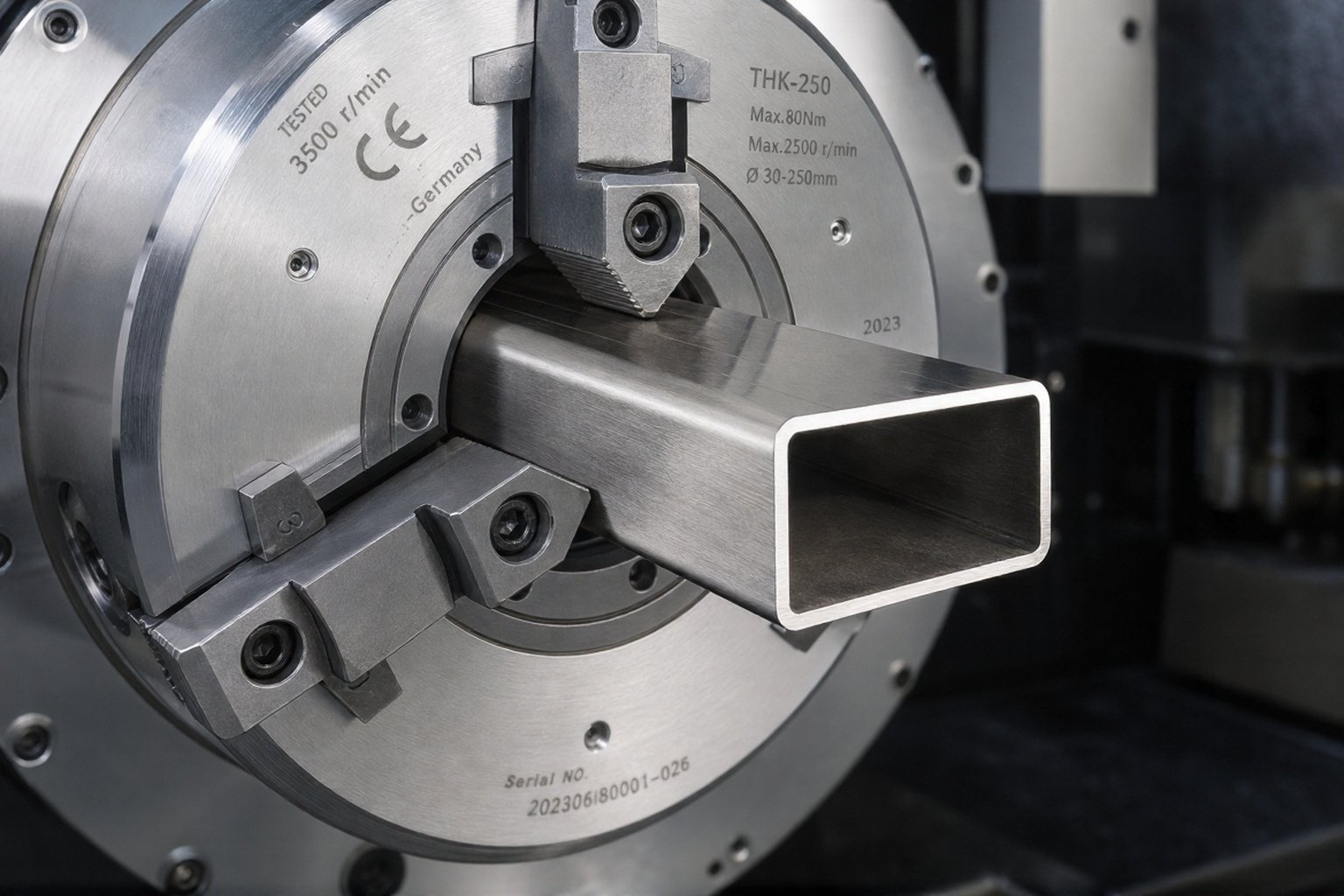
| Chuck class and count | Pneumatic self-centering chucks cost more than manual; a second chuck (pull-through, zero-tailing) adds a meaningful step |
| Loading automation | Automatic feeding and bundle magazines add cost and pay back in operator hours |
| Tube length and bed | 6 m and 9 m beds carry more structure, more support and more floor plan |
| Head capability | Bevel (45°) and 3D heads add axes, sensors and engineering |
| Software, training and service | Nesting software, remote diagnostics, warranty terms and spare-part stock — often the cheapest lines that matter most |
When two quotes differ by 30%, the difference is almost always in this table — usually the laser source tier and the chuck configuration — not in margin. Our engineer’s 9-step framework walks the same drivers from the specification side.
Where Cheap Machines Cut Corners
A quote that sits far below the others is not a bargain; it is a configuration you have not decoded yet. The usual places the money went missing: a laser source from a second-tier maker with different service coverage; a lighter bed that holds accuracy until the machine warms up; manual or single-chuck clamping that limits the tubes you can run; a cutting head without capacitance sensing that crashes on warped tube; and software that prices nesting by the year. None of these appear on the quotation as line items — which is exactly why the quote should itemize them. Ask what brand of source, what class of chuck and what is included in the warranty before comparing any two prices.
The Hidden Costs Buyers Miss
- Compressed air quality — cutting with air assist needs a dryer and filtration sized for the machine; this is a real line and it is almost never in the machine quote.
- Tooling and jaws — extra jaw sets for tube ranges outside the standard package, priced per set.
- Spare parts kit — nozzles, protective lenses, seals; buying the first-year kit with the machine is cheaper than air-freighting it later.
- Dust and fume extraction — required for a clean shop and for operator health; capacity depends on power and material.
- Installation and commissioning — remote commissioning is usually included, on-site commissioning is priced by trip.
- Shipping, insurance and duties — an export machine ships in a dedicated crate; DDP vs FOB changes the landed cost by double-digit percentages.
Machine Price vs. Cost per Cut
The purchase price is one number; the cost per cut is the one that matters. A tube laser replaces saw cutting plus drilling plus marking in one setup: against a plasma or saw workflow the savings arrive as eliminated secondary operations, reduced fixturing and higher unattended output — our breakdown of tube laser vs plasma cutting quantifies where the gap opens. Payback depends on shift utilization: a machine running one shift on real orders typically pays back far faster than its headline price suggests, and a machine bought cheaply that cannot hold tolerance resells at a fraction of its cost. Price the workflow, not the machine.
What to Send for an Accurate Price
A tube laser inquiry quotes accurately when it arrives with five things:
- Tube schedule — material, diameter range, wall thickness range, lengths, and the share of round vs square vs special profiles.
- Output target — tubes per shift or parts per month; this sizes the loading automation and the power class.
- Feature requirements — automatic loading, zero-tailing, bevel cutting, marking, unloading.
- Destination and terms — port and Incoterms (FOB/CIF/DDP), plus voltage and any local compliance needs.
- Schedule and budget class — when the machine must run, and the budget you are working within.
With those five items a factory returns an itemized quote — laser source, chucks, automation, tooling, packing as separate lines — and that document, not the headline number, is what you should sign. For the full machine landscape around the price classes, see the complete guide to tube laser cutting machines.
FAQ
What decides the price of an entry-level tube laser cutting machine?
The same six drivers, in smaller numbers: laser source tier, chuck class, loading automation and bed length. Entry configurations (1–1.5 kW, manual loading) exist for workshops moving off saw cutting, but confirm what is included — source brand, tooling package, software licensing and warranty terms decide whether the low price is a real one.
Why do quotes for the same wattage differ so much?
Because wattage is one of six price drivers. Laser source tier, chuck class and count, loading automation, bed length, head capability and service terms each move the number — two 3 kW machines can legitimately differ by 50%.
Is a bigger laser source always worth the money?
No. Extra power buys thickness capability and speed on thick sections; it does nothing for thin-wall speed or for edge quality on the profiles you actually run. Size the power from your tube schedule — see the thickness and speed charts in our companion guide.
Should we buy a used machine to save cost?
A used machine trades purchase price for unknown bed wear, source hours and no warranty. Tube laser accuracy lives in the chucks and the bed — the parts that wear. For production machines, factory-certified refurbished with a warranty, or a new lower-class machine, usually carries less risk.
Get an Itemized Quote
Send your tube schedule — a spreadsheet is fine — and the export team will return an itemized quotation with the source, chuck and automation lines visible. Request a quote from Chittak, or browse the laser pipe cutting machine range to shortlist models before you ask for numbers. More buying guides live in our blog archive.
The hidden material cost on every bar: read Zero-tailing laser tube cutting – the material-savings math (remnant arithmetic and when the H12 architecture pays).
POPULAR POSTS
- Zero-Tailing Laser Tube Cutting: The Material-Savings Math
- Square & Rectangular Tube Laser Cutting: Parameters & Design Rules
- Top 10 Tube Laser Cutting Machine Manufacturers in China (2026)
- Tube Laser Cutting Machine Parts: What Each Component Does
- Cold Saw vs Band Saw: Which for Tube and Profile? A Factory Guide
