
Fiber Laser vs CO2 Laser for Tube Cutting: Which Wins in 2026?
Fiber Laser vs CO2 Laser for Tube Cutting: Which Wins in 2026?
Introduction: The Ultimate Showdown for Tube Cutting in 2026
In the dynamic world of tube processing and manufacturing, selecting the right laser cutting technology is paramount for efficiency, precision, and profitability. As we look towards 2026, the debate between fiber laser vs CO2 tube cutting continues to evolve, driven by advancements in both technologies. This article provides a comprehensive comparison, examining the core differences, performance metrics, maintenance requirements, and real-world applications of each system. For plant owners, procurement managers, and engineering supervisors, understanding these nuances is crucial for making informed investment decisions. We will delve into why one technology might be superior for specific materials and production demands, ultimately helping you determine which laser cutting solution truly wins in the modern industrial landscape.
Choosing between a fiber laser cutter vs CO2 system is more complex than just speed or power; it encompasses factors such as operating costs, material versatility, and long-term reliability. With increased competition and demands for higher throughput, optimizing tube cutting operations is no longer optional. This guide will equip you with the knowledge to navigate these technological choices, ensuring your operations are future-proof and competitive.
Fiber Laser vs CO2 Laser: Unveiling Core Technology Differences
Understanding the fundamental differences between fiber and CO2 laser technology is the first step in appreciating their respective strengths and weaknesses in tube cutting applications. These distinctions profoundly impact their performance, cost, and suitability for various materials.
Wavelength and Beam Characteristics: The Crucial 1.064μm vs 10.6μm Divide
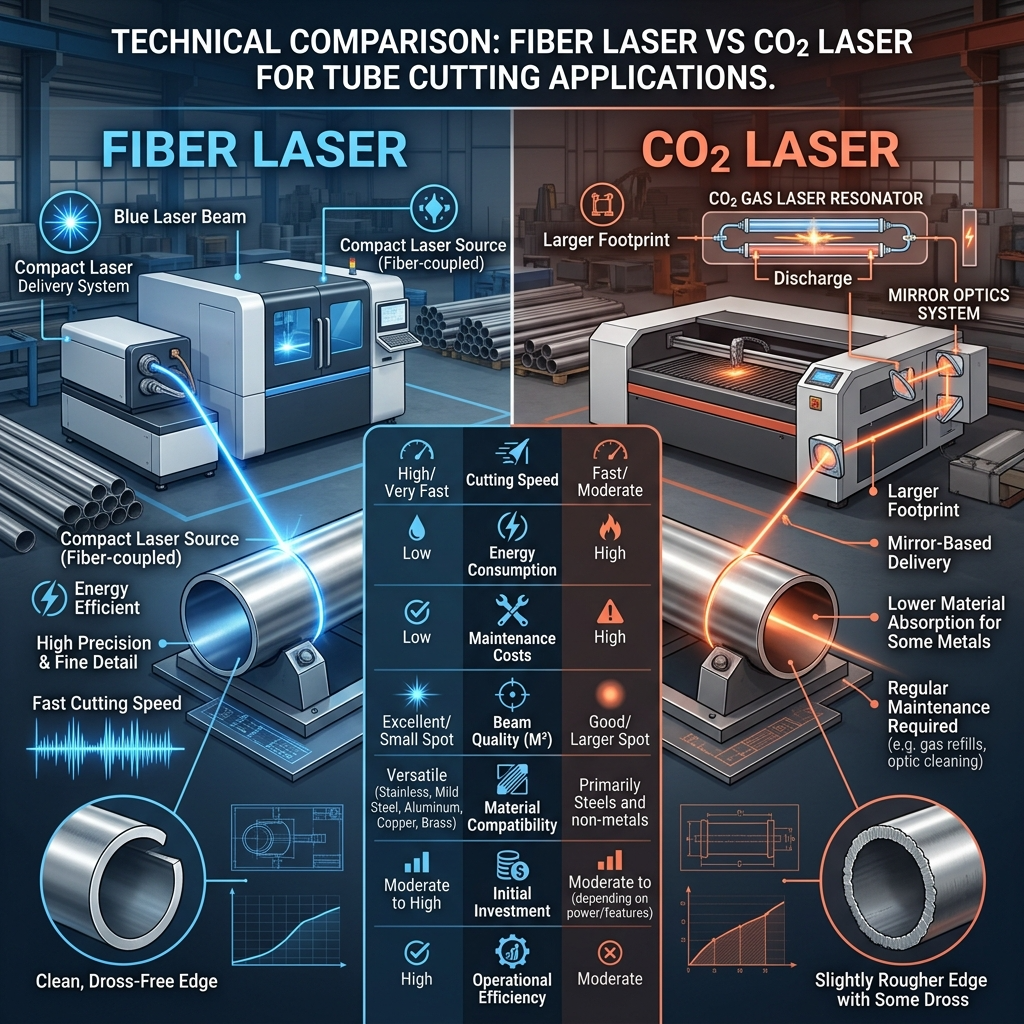
The most significant difference lies in their operational wavelengths. Fiber lasers typically operate at a wavelength of approximately 1.064 micrometers (μm), in the near-infrared spectrum. CO2 lasers, conversely, operate at a much longer wavelength of 10.6 μm, in the far-infrared spectrum. This difference between CO2 and fiber laser wavelengths dictates how materials absorb laser energy. The shorter wavelength of fiber lasers allows materials, particularly reflective ones, to absorb energy more readily, leading to higher efficiency in cutting these materials. CO2 lasers, with their longer wavelength, prove more effective for non-metals and certain thicker metals.
Laser Source Construction: Solid-State Brilliance vs Gas-Based Limitations
Fiber lasers are solid-state lasers; diodes pump light into a doped optical fiber to create the laser beam. The laser light then guides through the fiber optic cable to the cutting head. This solid-state design results in a compact, highly efficient, and robust system with fewer moving parts. In contrast, CO2 lasers are gas-based systems. They generate a laser beam by exciting a mixture of gases (carbon dioxide, nitrogen, and helium) with an electric discharge within a resonator cavity. The system then directs the beam to the cutting head via a complex system of mirrors and lenses. This gas-based approach requires more maintenance and occupies a larger footprint.
Power Delivery for Tube Cutting Applications: Fiber’s Flexible Advantage
The method of power delivery significantly impacts the overall system design and flexibility. Fiber lasers deliver the beam via a flexible fiber optic cable, offering exceptional flexibility in machine design and significantly reducing maintenance associated with beam delivery. This makes them ideal for intricate tube cutting paths and multi-axis applications. CO2 lasers rely on a series of mirrors and lenses to guide the beam from the resonator to the cutting head. While this system is highly refined, it is susceptible to misalignment, dust, and requires more frequent cleaning and adjustment, potentially impacting uptime and precision in tube cutting operations.
Beam Quality and Focus Precision on Cylindrical Surfaces: Fiber’s Sharper Edge
Fiber lasers typically offer superior beam quality, characterized by a smaller focal spot and higher power density. This excellent beam quality maintains itself even over long distances and allows for very precise cuts, especially crucial when dealing with the curved surfaces of tubes. The focused beam creates a narrow kerf and clean cuts. CO2 lasers also offer good beam quality, but the larger wavelength generally results in a slightly larger focal spot compared to fiber lasers. While still highly precise, maintaining consistent focus on the varying curvatures of cylindrical surfaces can be more challenging for CO2 systems, particularly at very high speeds, which is a key factor when comparing fiber laser vs CO2 tube cutting.
Tube Cutting Performance: Unmatched Speed and Material Versatility
The ultimate measure of any laser cutting system lies in its performance—speed, material compatibility, and the quality of the cut. Here, the fiber laser vs CO2 laser debate becomes particularly focused on tangible results in tube processing.
Cutting Speed Comparison on Stainless Steel Tubes: Fiber’s Blazing Fast Lead
For stainless steel tubes, fiber lasers generally offer a significant speed advantage, especially in thinner gauges. The shorter wavelength of the fiber laser allows stainless steel to absorb energy more efficiently, leading to faster piercing and cutting rates. This translates directly to higher throughput and productivity for manufacturers. CO2 lasers can cut stainless steel effectively, but their speed often lags behind fiber lasers, particularly when comparing fiber laser cutter vs CO2 models designed for high-volume production. This speed difference is a critical consideration for operations aiming for maximum efficiency.
Aluminum and Reflective Metal Tube Processing: Fiber’s Undisputed Victory
When it comes to highly reflective metals like aluminum, brass, and copper, fiber lasers are the undisputed champion. Their wavelength allows these materials to absorb energy much more readily, enabling cleaner, faster, and safer processing. CO2 lasers struggle with reflective metals due to high reflectivity, which can cause significant beam loss and even damage to the laser’s optics. This makes fiber laser vs CO2 laser an easy choice for facilities working predominantly with aluminum or other reflective alloy tubes.
Wall Thickness Capabilities: Navigating Thin vs Thick Tube Cutting
The capabilities of fiber laser vs CO2 laser also vary with wall thickness. Fiber lasers excel in cutting thin to medium-thick tubes (up to approximately 10-20mm for steel, depending on power). Their high power density allows for rapid piercing and cutting. For very thick tubes (e.g., above 20-25mm), high-power CO2 lasers can sometimes provide a cleaner cut with a straighter edge, though advancements in high-power fiber lasers steadily close this gap. The choice here often depends on the specific material and the maximum thickness of tubes regularly processed.
Edge Quality and Heat-Affected Zones in Tube Profiles: Precision Beyond Compare
Both technologies can produce excellent edge quality, but subtle differences exist. Fiber lasers, with their smaller focal spot and higher power density, generally produce a narrower kerf and a cleaner, smoother cut edge on many materials, with a minimal heat-affected zone (HAZ). This is particularly beneficial for parts requiring minimal post-processing. CO2 lasers also achieve high-quality cuts, but depending on the material and thickness, the HAZ might be slightly larger. For applications where thermal distortion must be absolutely minimized, the differences between CO2 and fiber laser in HAZ can be a deciding factor.
Chittak Fiber Laser Performance on Multi-Material Tube Production: A True Game-Changer
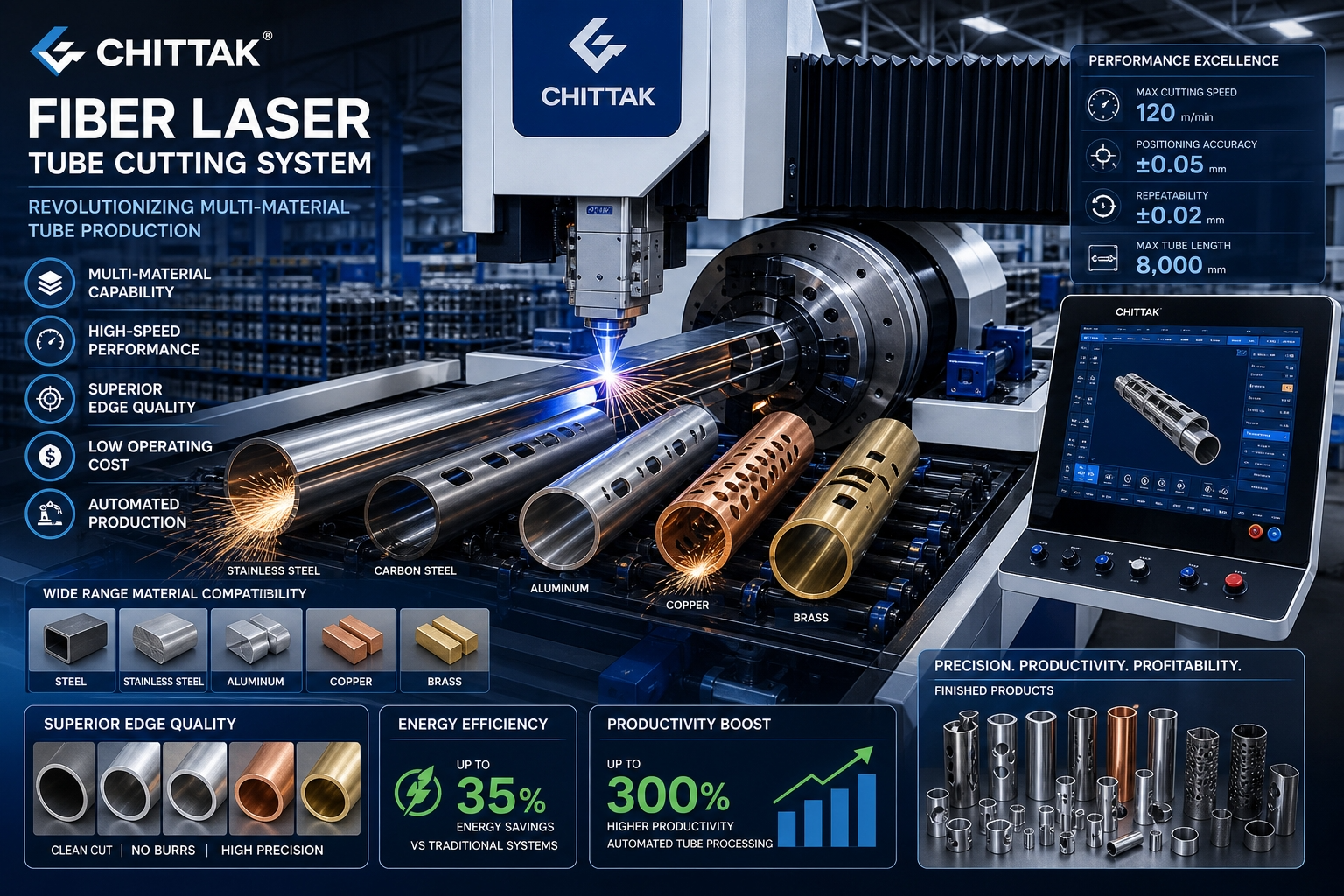
Chittak, a leading brand in laser cutting technology, demonstrates the superior versatility of fiber lasers in multi-material tube production. Chittak fiber laser systems are engineered to handle a wide array of metals—from stainless steel and mild steel to aluminum, copper, and brass—with consistent speed and precision. This capability makes a Chittak fiber laser cutter an invaluable asset for manufacturers dealing with diverse material requirements, significantly outperforming CO2 counterparts in material flexibility and overall efficiency. The advanced optics and power control systems in Chittak machines ensure optimal cutting parameters for each material, minimizing changeover times and maximizing output.
Maintenance Requirements and Operating Efficiency: Fiber’s Economic Triumph
Beyond cutting performance, the long-term operational costs and maintenance burden are critical factors in the fiber laser vs CO2 laser decision. These aspects significantly impact the total cost of ownership (TCO) and overall plant efficiency.
Daily Maintenance: Fiber’s Low-Effort Advantage vs CO2’s Demanding Needs
Fiber laser tube cutters generally require significantly less daily maintenance compared to CO2 systems. The solid-state design and fiber optic beam delivery eliminate the need for routine mirror alignment and lens cleaning, common tasks for CO2 lasers. This translates to less downtime and reduced labor costs. CO2 lasers, with their complex beam path and gas-filled resonator, demand more frequent checks and adjustments to maintain optimal performance. This difference between CO2 and fiber laser maintenance schedules can heavily influence operational fluidity.
Power Consumption: Fiber’s Remarkable Energy Savings
Energy efficiency is another area where fiber lasers often hold a distinct advantage. Fiber lasers typically convert electricity into laser light with an efficiency of 25-40%, whereas CO2 lasers are generally 8-10% efficient. This means that for the same output power, a fiber laser consumes considerably less electricity, leading to substantial savings in operating costs over time. In an era of rising energy prices, this lower power consumption makes a strong case for fiber laser vs CO2 tube cutting in terms of long-term economic viability.
Consumable Parts: Fiber’s Unbeatable Lifespan vs CO2’s Frequent Replacements
The lifespan and replacement costs of the laser source are major considerations. Fiber laser sources boast an exceptionally long operational lifespan, often exceeding 100,000 hours, with minimal degradation over time. They are virtually maintenance-free. CO2 laser tubes, however, typically have a shorter lifespan, ranging from 25,000 to 45,000 hours, and require periodic (and often costly) gas refills and tube replacements. The significant difference in laser source longevity and maintenance is a key factor when comparing fiber laser cutter vs CO2 systems.
Downtime Analysis: Fiber’s Unparalleled Uptime vs CO2’s Interruptions
The vastly different lifespans of the laser sources directly impact potential downtime. A fiber laser, with its 100,000-hour operational life, offers unparalleled reliability and uptime. This minimizes interruptions to production, ensuring consistent output. CO2 lasers, with their 25,000 to 45,000-hour lifespan, will necessitate more frequent maintenance and replacement cycles, leading to greater potential for downtime. For production managers, the reliability and reduced downtime associated with fiber laser technology make a compelling argument in the fiber laser vs CO2 tube cutting debate, especially in high-volume environments.
Real-World Tube Cutting Applications: Where Fiber Lasers Truly Shine
The practical application of laser cutting technology across various industries further highlights the strengths of both fiber and CO2 systems. Understanding these real-world scenarios helps in appreciating which technology is better suited for specific demands.
Automotive Exhaust System Manufacturing: Fiber’s Precision for Performance
In automotive exhaust system manufacturing, precision and speed are paramount, especially when working with stainless steel and thin-wall tubes. Fiber lasers are increasingly favored here due to their ability to rapidly cut complex geometries with high accuracy, producing clean edges suitable for subsequent welding processes. The speed advantage of fiber laser vs CO2 laser systems allows for faster production cycles and intricate designs required for modern exhaust components.
Furniture Frame and Structural Tube Fabrication: Fiber’s Versatile Craftsmanship
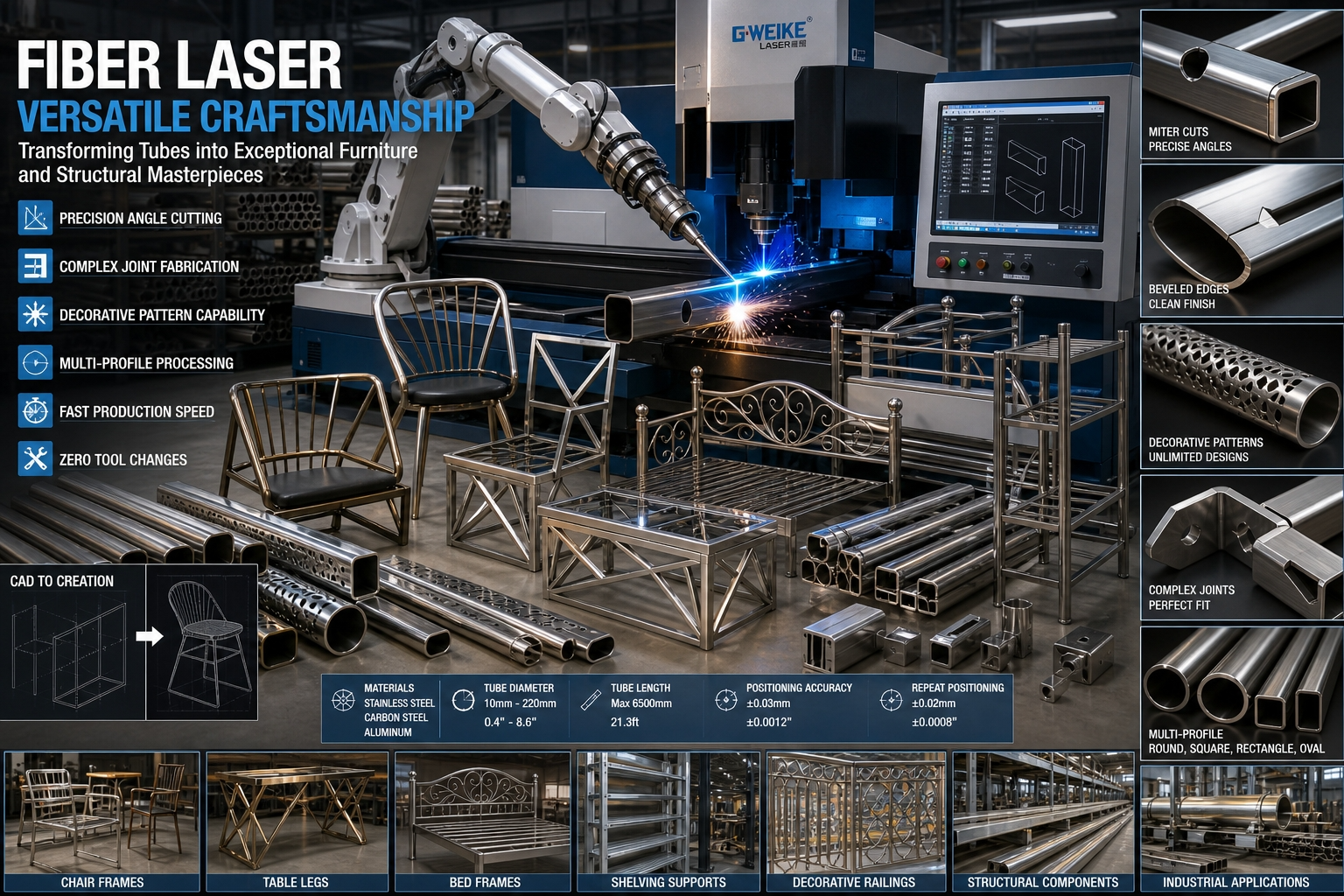
For furniture frames and structural tube fabrication, which often involves various mild steel and stainless steel tubes, the versatility of fiber laser cutting shines. Manufacturers can efficiently cut a range of tube shapes and sizes, from round to square and rectangular, with excellent edge quality. The minimal heat-affected zone produced by fiber lasers is crucial for maintaining the structural integrity of the components. This is a common application where the difference between CO2 and fiber laser processing becomes evident, with fiber lasers offering greater flexibility and efficiency.
HVAC Ductwork and Round Tube Processing: Fiber’s Efficiency in Airflow Solutions
HVAC ductwork and round tube processing benefit greatly from the high-speed and clean cutting capabilities of fiber lasers. Whether cutting holes, slots, or complex patterns into galvanized steel or aluminum tubes, fiber lasers deliver consistent results with minimal distortion. The ability to quickly process large volumes of tubes makes a fiber laser cutter vs CO2 a more attractive option for many HVAC manufacturers looking to optimize their production lines.
Aerospace Tube Component Production: Fiber’s Unrivaled Precision for Critical Parts
The aerospace industry demands unparalleled precision and material integrity. Here, fiber lasers are increasingly vital for cutting exotic alloys and thin-walled tubes with extremely tight tolerances. The superior beam quality and minimal HAZ of fiber lasers ensure that critical components meet stringent aerospace standards. While CO2 lasers have their place, the advantages of fiber laser technology in processing specialized aerospace materials are undeniable.
Conclusion: Fiber Laser – The Undisputed Champion of Tube Cutting in 2026
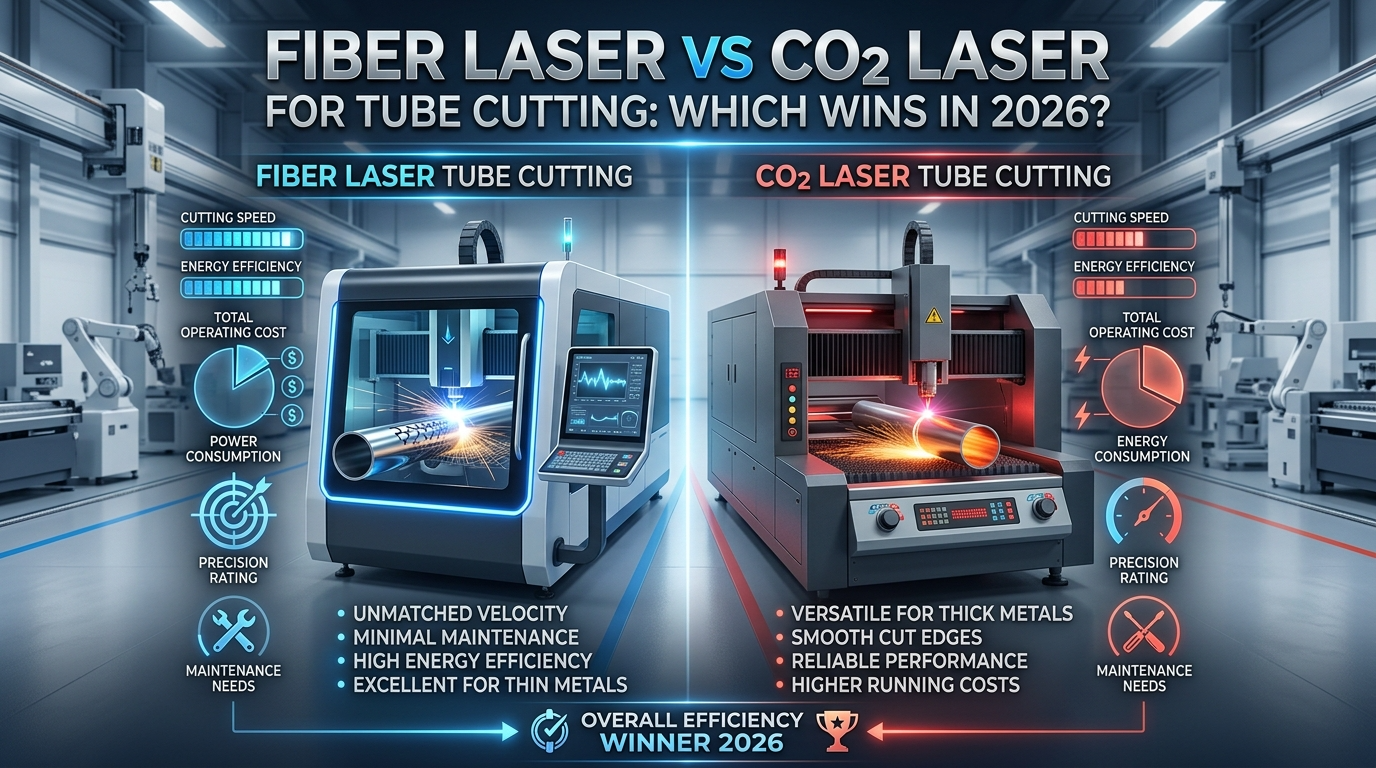
As we navigate the industrial landscape of 2026, the choice between fiber laser vs CO2 tube cutting is increasingly clear for many applications. While CO2 lasers still hold some niche advantages, particularly for certain non-metals and very thick materials, fiber lasers have emerged as the dominant technology for metal tube processing. Their superior speed on common metals, exceptional efficiency with reflective materials, lower power consumption, minimal maintenance, and extended laser source lifespan present a compelling case for improved productivity and reduced operating costs.
For tube processing and manufacturing plants, procurement managers, and production supervisors, investing in fiber laser technology—such as those offered by Chittak—represents a strategic move towards a more efficient, versatile, and profitable future. The long-term benefits in terms of uptime, energy savings, and material versatility make the fiber laser a clear winner in the vast majority of tube cutting scenarios in 2026. Making an informed decision based on material requirements, production volume, and overall cost of ownership will ensure your operations remain at the forefront of innovation and competitiveness.
FAQ: Your Questions About Fiber Laser vs CO2 Tube Cutting Answered
Q1: What is the main difference between CO2 and fiber laser for tube cutting?
The main difference lies in their wavelength and how the laser beam generates and delivers. Fiber lasers (1.064μm) are solid-state and use fiber optic cables, making them more efficient for metals. CO2 lasers (10.6μm) are gas-based and use mirrors, better suited for non-metals and some thick metals.
Q2: Which laser is faster for cutting stainless steel tubes?
Fiber lasers are generally significantly faster for cutting stainless steel tubes, especially in thinner gauges, due to their higher absorption rate by the material.
Q3: Can fiber lasers cut reflective metals like aluminum and copper tubes?
Yes, fiber lasers are highly effective at cutting reflective metals like aluminum, copper, and brass tubes with superior speed and quality compared to CO2 lasers, which struggle with these materials.
Q4: What are the maintenance differences between fiber laser vs CO2 tube cutting machines?
Fiber laser tube cutting machines require significantly less maintenance, with no mirrors to align or gas refills needed, and a laser source lifespan often exceeding 100,000 hours. CO2 lasers require more frequent maintenance, including mirror alignment, lens cleaning, and gas refills, with a shorter laser source lifespan.
Q5: Which laser technology is more energy-efficient?
Fiber laser technology is considerably more energy-efficient, converting 25-40% of electricity into laser light, compared to 8-10% for CO2 lasers, leading to lower operating costs.
Q6: Is Chittak a good brand for fiber laser tube cutting systems?
Yes, Chittak is a leading brand known for advanced fiber laser systems that offer high precision, speed, and versatility across a wide range of materials and industrial applications, making them a reliable choice for tube cutting.
POPULAR POSTS
- Cold Saw vs Band Saw: Which for Tube and Profile? A Factory Guide
- Laser Tube Cutting Thickness and Speed: Real Specs from the Factory
- Tube Laser Cutting Machine Price: A Factory Guide to Cost and Quotes
- How to Cut Stainless Steel Tubes with a Fiber Laser
- Case Study: German Furniture Maker Cut Setup Time 73% with CHITTAK
