
Understanding HAZ in Fiber Tube Laser Cutting
Introduction
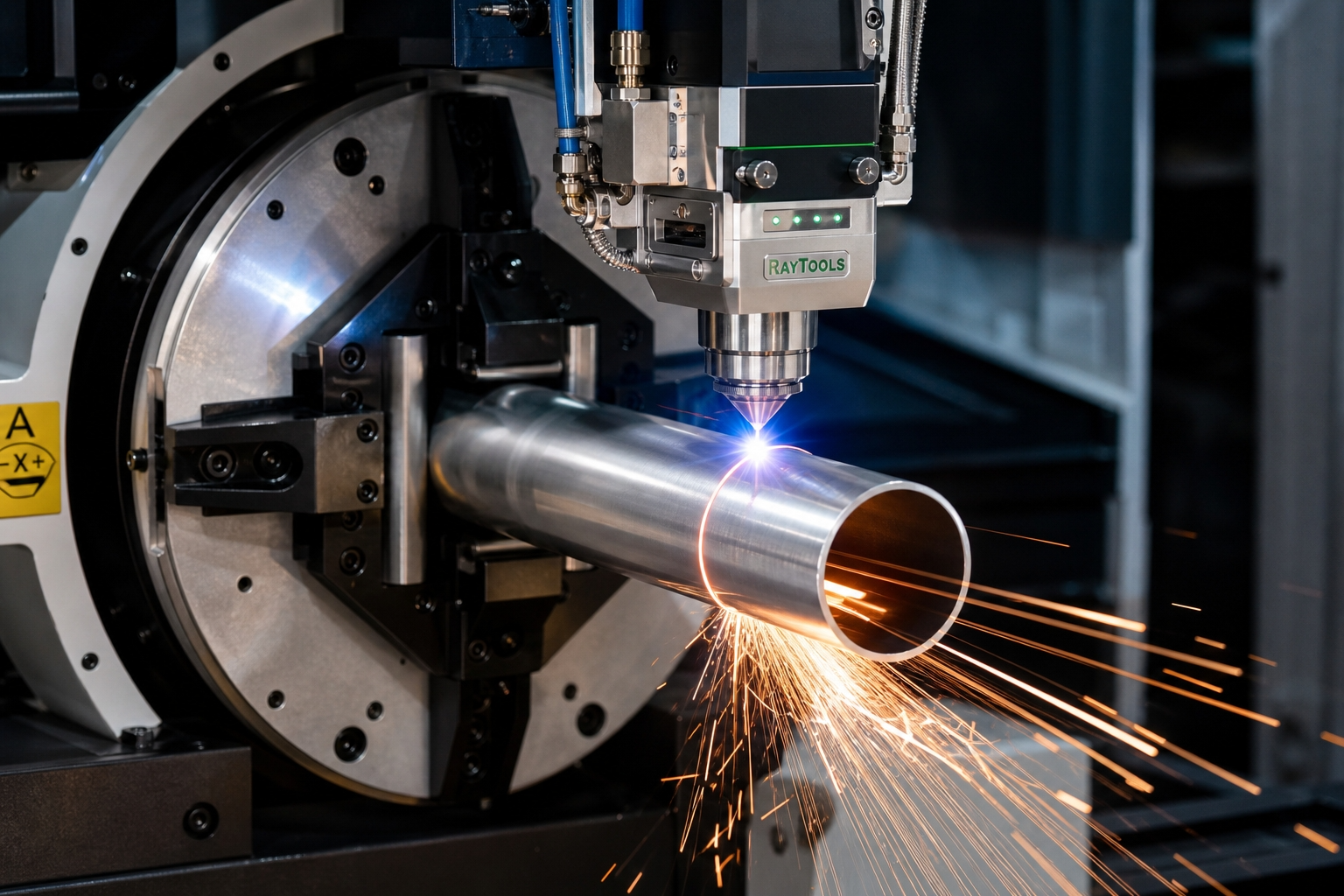
The landscape of modern manufacturing relies heavily on precision and efficiency. In the realm of metal fabrication, fiber tube laser cutting has emerged as a cornerstone technology, offering unparalleled accuracy and speed for complex tube profiles. However, even with advanced capabilities, manufacturers face challenges, one of the most critical being the Heat Affected Zone (HAZ). Understanding HAZ in fiber tube laser cutting is not just about academic knowledge; it’s about optimizing production, ensuring material integrity, and delivering superior products.
This comprehensive guide delves into the intricacies of HAZ, exploring its formation, influencing factors, and effects on various materials. We will also discuss strategies to minimize HAZ, enhance safety protocols, and highlight how Chittak fiber tube laser cutter technology addresses these concerns. Our aim is to provide valuable insights for owners of tube processing plants, procurement managers, plant engineering supervisors, and all stakeholders seeking to achieve a laser cut safe environment and superior results.
What Is HAZ in Fiber Tube Laser Cutting
To effectively mitigate the effects of HAZ, it’s crucial to first understand what it is and how it manifests during the fiber tube laser cutting process. This knowledge forms the foundation for implementing effective control strategies.
Definition of Heat Affected Zone
The Heat Affected Zone (HAZ) refers to the area of a material that has not been melted but has undergone changes in its microstructure and properties due to the heat input from a welding or cutting process. In the context of fiber tube laser cutting, this zone extends from the cut edge into the bulk material. While the laser’s primary function is to melt and vaporize material along the cut line, the surrounding material absorbs a significant amount of heat, leading to these undesirable changes. The extent and severity of HAZ are critical considerations for component performance and overall product quality, impacting everything from strength to corrosion resistance. A minimal HAZ is indicative of a well-controlled laser cut safe process.
How HAZ Forms During Tube Cutting
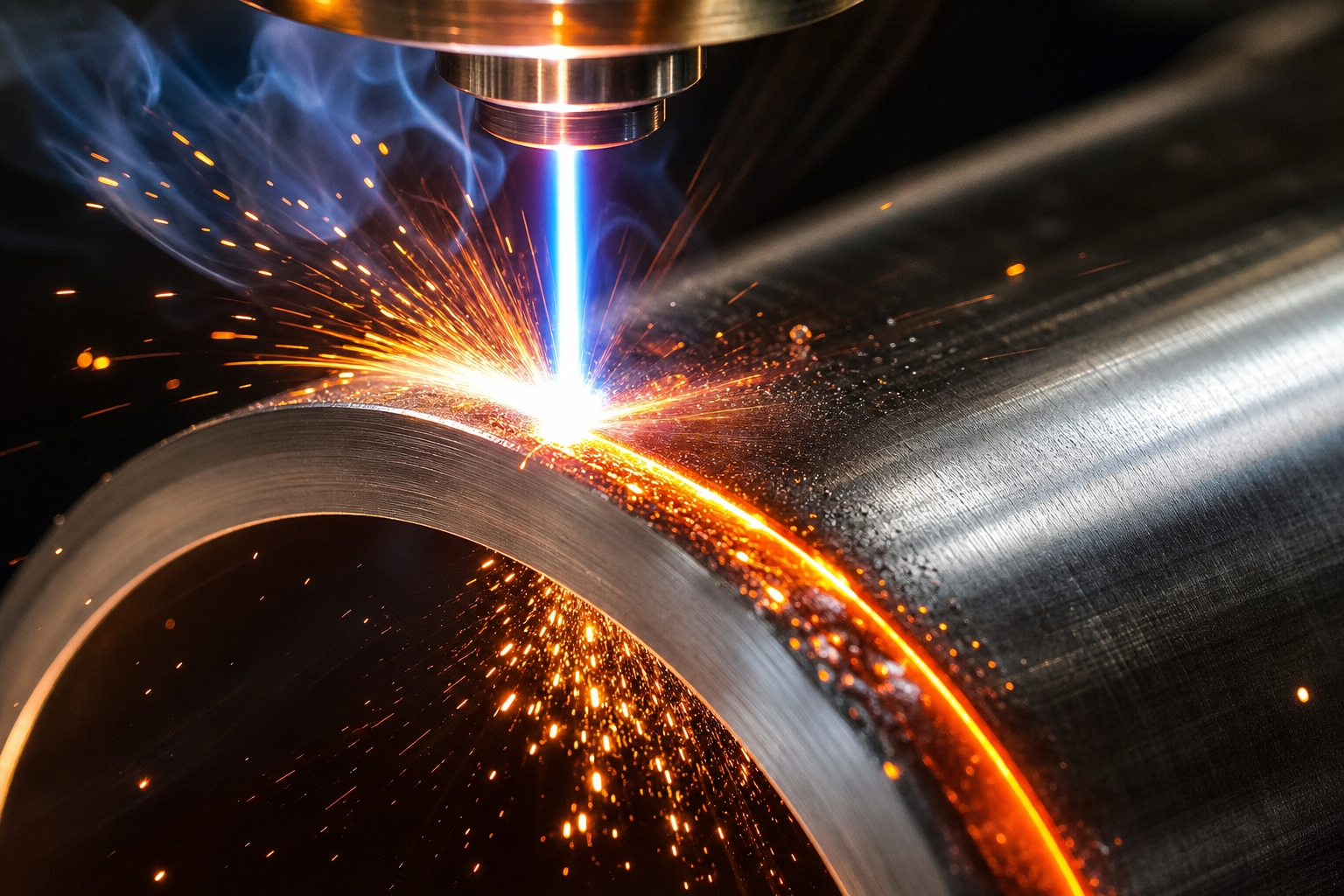
The formation of HAZ in fiber tube laser cutting is a direct consequence of the thermal energy transferred from the laser beam to the workpiece. As the high-energy laser beam interacts with the tube material, it generates intense localized heat. While the molten material is expelled by the assist gas, a portion of this heat dissipates into the adjacent material. This localized heating and subsequent cooling cycle can lead to phase transformations, grain growth, or precipitation of new phases within the material’s microstructure. The speed at which the laser moves, the power it delivers, and the material’s thermal properties all play significant roles in how extensive the HAZ becomes. When performing fiber tube laser cutting, minimizing this heat spread is key to achieving a high-quality finished product.
Visible Signs of HAZ on Cut Edges
Identifying HAZ can often be done through visual inspection of the cut edges. The most common visible signs include discoloration, tarnishing, or a change in the surface finish adjacent to the cut. For instance, stainless steel may exhibit a bluish or yellowish tint, while carbon steel might show increased oxidation or a darkened edge. Roughness, burrs, or an uneven surface texture can also indicate a significant HAZ. In some cases, microcracks or small deformations might be present, particularly in more brittle materials. These visible cues are crucial for immediate feedback on the laser cut safe quality and for adjusting parameters to achieve a more precise and clean cut with reduced HAZ.
Factors That Influence HAZ in Fiber Laser Tube Cutting
Several interconnected factors dictate the size and characteristics of the HAZ during fiber laser tube cutting. A nuanced understanding of these variables allows operators to fine-tune their processes for optimal results and minimal thermal impact.
Laser Power and Cutting Speed Parameters
The interplay between laser power and cutting speed is perhaps the most influential factor in determining HAZ. High laser power, while enabling faster cutting, can also introduce more heat into the material, potentially enlarging the HAZ. Conversely, a cutting speed that is too slow for a given power can also lead to excessive heat buildup and a wider HAZ. The goal is to find the optimal balance where sufficient power is applied to achieve a clean cut while moving fast enough to minimize the heat soak into the surrounding material. This fine-tuning is crucial for maintaining the integrity of the material and achieving a laser cut safe part.
Material Thickness and Thermal Conductivity
The physical properties of the tube material itself play a significant role. Thicker materials generally require more laser power and longer interaction times, leading to a larger HAZ. Materials with high thermal conductivity, such as copper and aluminum, dissipate heat more quickly. While this might seem beneficial, it also means that more energy is needed to initiate and sustain the cut, which can still result in a substantial HAZ if not managed correctly. Materials with lower thermal conductivity, like some stainless steels, tend to retain heat in the immediate cutting area, making HAZ control equally challenging. Effective fiber tube laser cutting requires accounting for these material-specific characteristics.
Assist Gas Selection: Nitrogen vs Oxygen
The choice of assist gas and its pressure significantly impacts HAZ formation. Oxygen is commonly used for cutting carbon steel because it creates an exothermic reaction that aids in the cutting process, allowing for faster speeds. However, this reaction also generates additional heat, which can lead to a wider HAZ and increased oxidation on the cut edge. Nitrogen, an inert gas, suppresses oxidation and cools the cut zone more effectively, resulting in a cleaner, brighter cut edge with a significantly smaller HAZ, especially for materials like stainless steel and aluminum. The appropriate assist gas contributes significantly to a laser cut safe process.
Beam Quality and Focus Positioning
The quality of the laser beam and its precise focus positioning are critical. A high-quality beam with a small, stable focal spot concentrates the energy more effectively, allowing for a cleaner cut with less heat dispersion. If the beam quality is poor or the focus is improperly positioned (too high or too low relative to the material surface), the laser energy spreads out, leading to a wider kerf and an increased HAZ. Advanced focusing systems in modern fiber laser tube cutter machines help maintain optimal beam quality and focus, contributing to superior cut quality and minimizing the Heat Affected Zone.
HAZ Effects on Different Tube Materials
The impact of HAZ is not uniform across all materials. Different metals react distinctly to the thermal stress induced by fiber tube laser cutting, leading to a variety of material property alterations.
Stainless Steel Tubes: Discoloration and Hardening
When cutting stainless steel tubes with a fiber laser, HAZ often manifests as discoloration, typically appearing as blue, yellow, or brown tints near the cut edge. This is due to surface oxidation. More significantly, stainless steel can undergo carbide precipitation in the HAZ, particularly in certain grades, which can lead to a reduction in corrosion resistance. Furthermore, the rapid heating and cooling can induce localized hardening, making subsequent machining or bending operations more challenging and potentially increasing brittleness. Maintaining a laser cut safe environment here involves careful parameter control.
Aluminum Tubes: Thermal Expansion Challenges
Aluminum tubes, known for their high thermal conductivity, present unique challenges. The rapid heating and cooling during fiber tube laser cutting can cause significant thermal expansion and contraction, potentially leading to warping or distortion, especially in thin-walled tubes. The HAZ in aluminum can also exhibit micro-cracking or localized softening, affecting the material’s structural integrity. Managing the Heat Affected Zone effectively in aluminum requires precise control over cutting parameters and sometimes specific cooling strategies to prevent these undesirable effects.
Carbon Steel Tubes: Oxidation and Brittleness
Cutting carbon steel tubes with a fiber laser often results in a HAZ characterized by increased oxidation and potential brittleness. If oxygen assist gas is used, the exothermic reaction enhances the cutting speed but also promotes oxidation, leaving a rougher, darker edge. The rapid thermal cycle can also create martensitic structures in certain carbon steels, leading to increased hardness and brittleness in the HAZ. This can compromise the material’s ductility and impact resistance, which is a critical consideration for structural applications. For optimal laser cut safe results, minimizing HAZ in carbon steel is paramount.
Copper and Brass Tubes: High Conductivity Issues
Copper and brass tubes, due to their exceptionally high thermal conductivity, are among the most challenging materials to cut with a fiber laser while minimizing HAZ. The material efficiently dissipates heat, requiring higher laser power to achieve a through-cut. This increased power, even with optimized speeds, can lead to a wider HAZ. Effects can include significant discoloration, burr formation, and potential softening or annealing of the material in the affected zone, which can alter its mechanical properties. Advanced fiber laser tube cutter technology is crucial for managing these highly conductive materials.
How to Minimize HAZ in Fiber Laser Tube Cutting
Reducing the Heat Affected Zone is paramount for achieving high-quality cuts and preserving material integrity. Several strategies can be employed to minimize HAZ during fiber tube laser cutting.
Optimize Cutting Parameters for Lower Heat Input
The most direct way to minimize HAZ is through meticulous optimization of cutting parameters. This involves finding the sweet spot between laser power, cutting speed, focal position, and pulse frequency. The goal is to achieve the fastest possible cutting speed with the lowest effective laser power that still produces a clean, burr-free cut. For instance, increasing cutting speed slightly while maintaining adequate power can reduce the interaction time between the laser and the material, thereby limiting heat penetration. This fine-tuning is often specific to the material type and thickness and is a continuous process for achieving a laser cut safe product.
Use Pulsed Mode Operation
For certain applications and materials, operating the fiber laser in pulsed mode can significantly reduce HAZ compared to continuous wave (CW) mode. In pulsed mode, the laser delivers short bursts of high-peak power energy, allowing the material to cool slightly between pulses. This intermittent heating and cooling strategy limits the overall heat input into the material, minimizing the spread of the Heat Affected Zone. Pulsed mode is particularly effective for cutting thin materials or those highly susceptible to thermal distortion, ensuring a cleaner cut with less thermal damage.
Select Proper Assist Gas Pressure
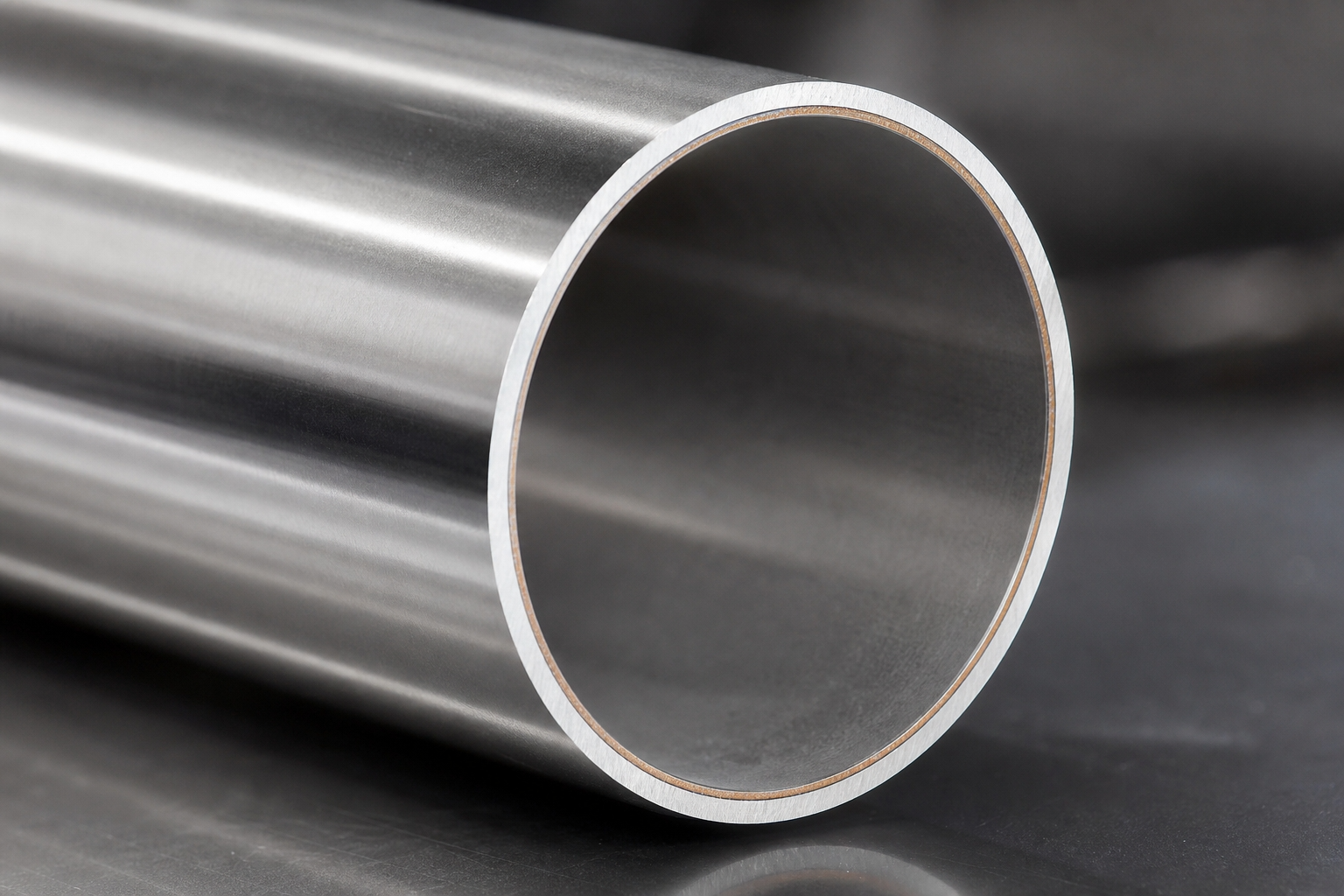
The assist gas not only expels molten material but also plays a crucial role in cooling the cut zone. Using the correct type and pressure of assist gas is vital. For materials where oxidation is a concern (e.g., stainless steel, aluminum), nitrogen is preferred at higher pressures to suppress reactions and enhance cooling, thereby reducing HAZ. For materials like carbon steel, where oxygen is often used, optimizing its pressure to avoid excessive exothermic reactions can help control HAZ size. The right assist gas pressure ensures efficient material removal and effective cooling, contributing to a laser cut safe environment.
Apply Advanced Focusing Systems
Modern fiber laser tube cutter machines often incorporate advanced focusing systems that contribute significantly to HAZ reduction. These systems maintain a precise and small focal spot, concentrating the laser energy intensely at the cutting point. This focused energy allows for more efficient material removal with less heat diffusion into the surrounding material. Features like adaptive optics or dynamic focus control can further optimize the beam delivery, ensuring consistent cut quality even on complex tube geometries and minimizing the Heat Affected Zone across the entire cut length.
Fiber Laser Tube Cutter Safety and HAZ Management
Beyond optimizing cut quality, managing HAZ is inextricably linked to overall safety and operational efficiency in a manufacturing plant. A comprehensive approach ensures both product integrity and personnel well-being.
Laser Cutting Safety Protocols During Operation
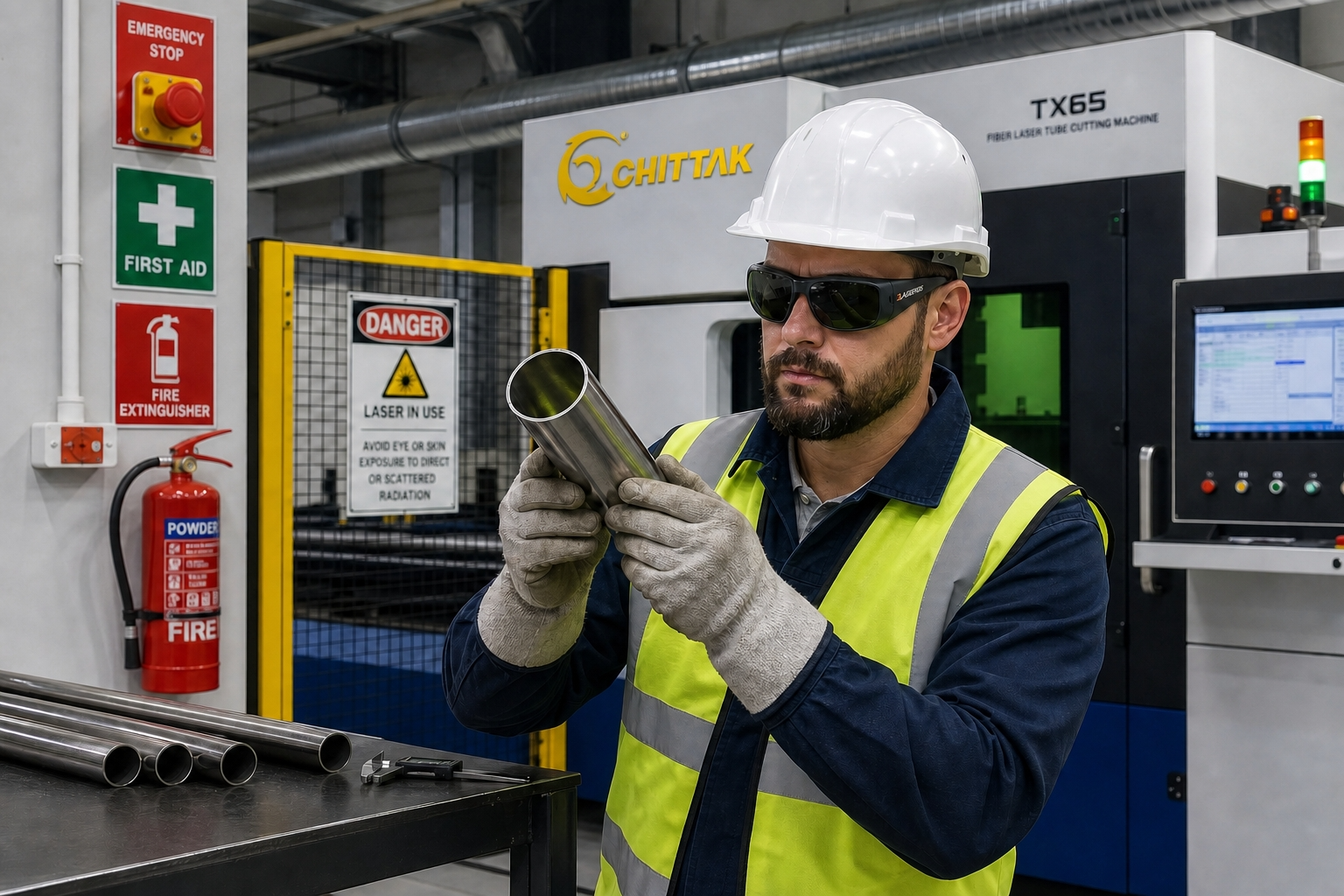
Operating a fiber tube laser cutter necessitates strict adherence to laser cutting safety protocols. This includes ensuring all safety interlocks are functioning, using appropriate personal protective equipment (PPE) such as laser safety glasses, and maintaining a clear understanding of emergency stop procedures. Proper ventilation is also crucial to remove fumes and particulate matter generated during cutting, which can pose respiratory hazards. Regular training for operators on laser cutting safety is paramount to prevent accidents and ensure a safe working environment. Chittak prioritizes these safety features in its equipment design.
Protective Equipment for HAZ Inspection
While HAZ is a material characteristic, inspecting for its presence also requires specific protective equipment. When visually inspecting cut edges, especially immediately after cutting, appropriate eye protection should be worn to shield against any residual laser light or intense reflections. Magnifying glasses or microscopes may be used for detailed inspection, and operators should ensure their hands are protected with gloves if handling hot or sharp parts. A comprehensive laser cut safe protocol extends to every stage, including post-processing inspection.
Chittak Fiber Laser Tube Cutter Safety Features
Chittak fiber laser tube cutter machines are designed with an emphasis on both cutting precision and operator safety. Our equipment incorporates advanced safety features such as fully enclosed work areas to contain laser radiation and fumes, interlocked doors that prevent operation when open, and integrated exhaust systems for efficient fume extraction. Furthermore, our control systems are equipped with intelligent monitoring capabilities that alert operators to potential issues, allowing for proactive adjustments to maintain optimal cutting conditions and minimize HAZ while ensuring a laser cut safe environment. The robust design of the Chittak fiber laser tube cutter ensures reliable and secure operation.
Post-Cutting Inspection Procedures
Implementing rigorous post-cutting inspection procedures is essential for quality control and HAZ management. This involves visually inspecting cut edges for discoloration, burrs, or micro-cracks that indicate an excessive HAZ. Measurement tools can be used to check dimensional accuracy and verify that thermal distortion is within acceptable tolerances. For critical components, metallurgical analysis may be performed to assess microstructure changes in the HAZ. Documenting these inspections helps identify trends, refine cutting parameters, and ensure that all parts meet the required quality standards for a laser cut safe production.
Conclusion
Understanding and effectively managing HAZ in fiber tube laser cutting is not merely an option but a necessity for modern manufacturing excellence. From defining the Heat Affected Zone to identifying its diverse impacts on materials like stainless steel, aluminum, and carbon steel, we’ve explored the multifaceted nature of this thermal phenomenon. The intricate dance between laser power, cutting speed, assist gas, and beam quality dictates the extent of HAZ, underscoring the importance of precise parameter optimization.
By adopting strategies such as pulsed mode operation, selecting appropriate assist gases, and leveraging advanced focusing systems, manufacturers can significantly minimize HAZ, leading to superior cut quality, enhanced material integrity, and reduced post-processing efforts. Furthermore, integrating robust laser cutting safety protocols and utilizing the advanced safety features found in a Chittak fiber laser tube cutter ensures a secure and efficient production environment. For any operation seeking to achieve a truly laser cut safe and high-quality product, meticulous attention to HAZ management is paramount, ensuring that every cut is precise, clean, and upholds the highest standards of manufacturing.
FAQ
What is the primary concern with HAZ in fiber tube laser cutting?
The primary concern with HAZ in fiber tube laser cutting is the undesirable change in material properties (e.g., hardness, corrosion resistance, ductility) in the area adjacent to the cut, which can compromise the integrity and performance of the final product.
Can HAZ be completely eliminated in fiber tube laser cutting?
Completely eliminating HAZ in fiber tube laser cutting is generally not possible as some heat transfer is inherent to the process. However, it can be significantly minimized through optimized parameters and advanced techniques.
How does assist gas selection impact HAZ when performing fiber tube laser cutting?
Assist gas selection greatly impacts HAZ; inert gases like nitrogen reduce HAZ by cooling the cut zone and preventing oxidation, while reactive gases like oxygen can increase HAZ due to exothermic reactions.
What materials are most susceptible to significant HAZ effects during fiber tube laser cutting?
Materials with high thermal conductivity like copper and brass, or those prone to microstructural changes like certain grades of stainless and carbon steel, are often most susceptible to significant HAZ effects during fiber tube laser cutting.
How does a Chittak fiber laser tube cutter help manage HAZ?
Chittak fiber laser tube cutters utilize advanced focusing systems, precise parameter control, and robust design to minimize heat input and optimize cooling, thereby effectively managing and reducing HAZ for a laser cut safe result.
